Replacing a faulty heating element in a deep fryer can restore its functionality, saving the cost of a full appliance replacement. This repair typically involves disconnecting the fryer from power, draining oil, accessing and removing the old element, installing a new compatible element, and reassembling the unit. The process usually takes 1-2 hours, depending on the fryer model and your experience level, and requires basic tools like screwdrivers and wrenches.
Understanding Deep Fryer Heating Elements
At the heart of every electric deep fryer lies the heating element, a crucial component responsible for transforming electrical energy into the thermal energy needed to heat cooking oil. Most deep fryers utilize immersion heating elements, which are directly submerged in the oil, maximizing heat transfer efficiency and reducing energy loss. This design ensures the oil quickly reaches and maintains the precise temperatures required for optimal frying.
A functional heating element is essential for consistent results. It ensures rapid heating, uniform heat distribution throughout the oil, and quick temperature recovery after food is added. Without it, you’d be left with greasy, undercooked, or unevenly fried dishes.
Common types of heating elements include tubular and coil elements. Tubular heating elements, often made of stainless steel, are recognized for their durability and even heat distribution, frequently found in both commercial and home fryers. Coil heating elements, typically a metal alloy wound in a spiral, heat up quickly and are common in smaller, domestic units where rapid heating is a priority. Some advanced fryers might also incorporate ceramic or infrared heating elements for enhanced efficiency and temperature control.
Factors to Consider Before Replacing Your Deep Fryer Heating Element
Before diving into the repair, it’s vital to consider a few key aspects to ensure a smooth and safe replacement process.
First, identify the symptoms of a failing heating element. Is your fryer not heating at all, or is the oil heating unevenly? Does the circuit breaker trip when you try to use the fryer? These are all common indicators that your heating element might be at the end of its lifespan.
Safety should always be your top priority. Before you touch anything, always ensure the fryer is completely unplugged and disconnected from any power source. Allow ample time for the oil and the element to cool down completely to prevent severe burns. Draining the oil beforehand is also crucial for safe handling.
Compatibility is non-negotiable when selecting a replacement element. Not all heating elements are universal. You must ensure the new element exactly matches the specifications of your deep fryer model, including its voltage and dimensions. Consult your fryer’s manufacturer manual or the product’s data plate to find the correct part number. Using an incompatible element can lead to further damage or safety hazards.
Gathering the right tools before you start will make the job much easier. You’ll typically need a set of screwdrivers, wrenches or sockets, possibly a multimeter to test continuity, and crucially, safety glasses and heat-resistant gloves. Always keep your manufacturer’s manual handy for specific instructions and diagrams relevant to your model. This document will be your best friend throughout the replacement process.
Step-by-Step Guide: Replacing a Deep Fryer Heating Element
Replacing a deep fryer heating element can seem daunting, but by following these steps carefully, you can achieve a successful repair.
1. Preparation and Safety
|
Our Picks for the Best Deep Fryer in 2026
As an Amazon Associate I earn from qualifying purchases.
|
||
| Num | Product | Action |
|---|---|---|
| 1 | Alpha Living Electric Deep Fryer – 4.5L Deep Fryer with Basket with 2-Quart and 4-Quart Baskets – High-Grade Stainless Steel – Temperature Control and Timer – Ideal for Fried Chicken, Fries |

|
| 2 | Chefman 4.5 Liter Deep Fryer w/Basket Strainer, XL Jumbo Size, Adjustable Temperature & Timer, Perfect for Fried Chicken, Shrimp, French Fries, Chips & More, Removable Oil-Container, Stainless Steel |
|
| 3 | Hamilton Beach 35032 Professional Style Electric Deep Fryer, Frying Basket with Hooks, 1500 Watts, 3 Liters, Stainless Steel |
|
| 4 | Secura 4 Liters / 17-Cup Stainless-Steel 1700-Watt Electric Deep Fryer with Timer Free Extra Odor Filter, Triple Basket, 4.5 Quarts, Black |
|
| 5 | T-fal 3.5L Stainless Steel Deep Fryer with Basket for Home Use, 1700W, Deep Fryer with Oil Filtration, Temp Control, Digital Timer |
|
| 6 | Elite Gourmet Electric Deep Fryer, 4.5 Qt Total Oil Capacity (Dual 2-Qt Split Baskets), 1700 Watts, Stainless Steel, Separates Foods for Simultaneous Cooking, Stainless Steel |
|
| 7 | Hamilton Beach Cool Touch Electric Deep Fryer with Basket and Lid, 2 Liters / 8 Cups Oil Capacity, Adjustable Temperature, 1500 Watts for Fast Heat-up, viewing Window Easy to Clean, Black (35021) |
|
| 8 | Hamilton Beach Electric Deep Fryer with 3 Baskets and Lid, 4.5 Liters / 19 Cups Oil Capacity, Temperature Control, View Window, Professional Style, 1800 Watts, Stainless Steel (35034) |
|
| 9 | West Bend Deep Fryer with Adjustable Temperature Control Nonstick Basket Easy-View Window and Temperature Guide, Folding Handle and Locking Cover for Easy Storage, 3-Liter, Silver |
|
| 10 | Secura 4 Liters / 17-Cup Stainless-Steel 1700-Watt Electric Deep Fryer with Timer Free Extra Odor Filter, Triple Basket, 4.5 Quarts, Silver |
|
Begin by ensuring your deep fryer is completely disconnected from its power source. Unplug it from the wall outlet or switch off the dedicated circuit breaker. Allow the fryer to cool down entirely—this can take several hours, especially after heavy use. Once cool, carefully drain any remaining cooking oil into a suitable container for disposal or filtration. It’s also wise to put on your protective gear, including safety glasses and gloves, to safeguard against any residual oil or sharp edges.
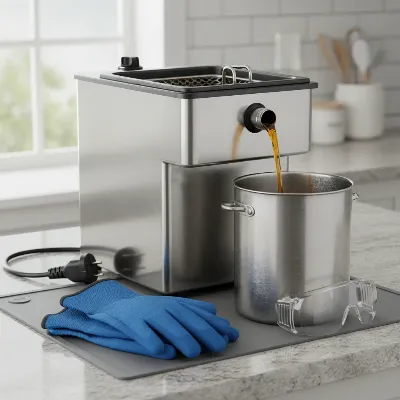 A deep fryer unplugged and cooling, with oil being safely drained into a container.
2. Accessing the Heating Element
The method for accessing the heating element varies by deep fryer model. For many residential fryers, this might involve simply lifting the control panel assembly, which often houses the heating element. For commercial units, you might need to remove a front panel, side panels, or even the entire control panel. Refer to your manufacturer’s manual for precise instructions. As you disassemble, take clear photos of the wiring and component arrangement. These visual references will be invaluable during reassembly.
3. Disconnecting the Old Element
Once the heating element is accessible, you will see wires connected to its terminals. It’s crucial to label these wires before disconnecting them to ensure they are reattached correctly to the new element. You can use masking tape and a marker for this. Carefully disconnect all wiring and any mounting brackets or nuts that secure the element in place. These might include hex nuts or brass nuts, which may require specific wrenches to loosen. Once all connections and fasteners are removed, gently slide or lift out the old heating element from the fryer vat.
4. Installing the New Element
Before installing the new element, inspect it for any damage and ensure it’s the correct replacement part. Many heating elements come with new rubber O-rings; these are vital for creating a tight, leak-proof seal where the element terminals pass through the fryer body. Install these O-rings onto the terminal ends of the new element. Carefully thread the element terminals through the corresponding holes in the fryer vat wall. Secure the element in place by replacing and tightening the mounting nuts and washers. If your manual specifies a torque setting for these nuts, follow it precisely to ensure a secure, oil-tight seal. Reconnect the labeled wires to the appropriate terminals on the new heating element. Double-check all connections to ensure they are tight and correctly positioned according to your earlier photos and labels.
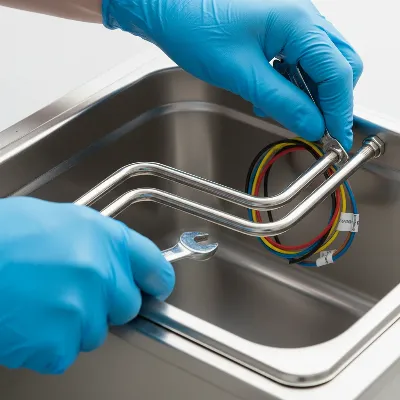 Hands carefully installing a new tubular heating element into a deep fryer vat, securing wires and nuts.
5. Reassembly and Testing
With the new heating element securely installed and wired, reassemble any covers or panels you removed. Ensure all components are properly aligned and fastened. Refill the fryer with fresh cooking oil, making sure it reaches the recommended fill level as indicated by the manufacturer. Plug the deep fryer back into its grounded outlet or restore power at the circuit breaker. Turn on the fryer and set it to a desired temperature. Closely monitor the first heating cycle to confirm that the element is heating properly and the oil temperature is stable and accurate. Listen for any unusual noises and watch for smoke or odd smells, which could indicate an issue.
Maintenance Tips for Deep Fryer Heating Elements
Once your deep fryer is back in action with a new heating element, proper maintenance is key to extending its lifespan and ensuring continued optimal performance.
Regular cleaning is paramount. Carbonized oil and food crumbs can accumulate on the heating element, acting as an insulator and reducing its efficiency. This buildup forces the element to work harder, leading to premature wear and potential safety hazards. Always clean the element thoroughly after draining the oil, using non-abrasive tools and mild degreasers to avoid scratching its surface.
Proper oil management also plays a crucial role. Regularly change your cooking oil as recommended by the manufacturer or after about eight uses, as dirty oil can degrade faster and leave more residue on the element. Avoid overfilling the fryer, as this can lead to oil overflow and potential electrical issues or fire hazards if hot oil splashes onto electrical components.
Finally, consider professional inspections. An experienced technician can identify potential issues that may not be obvious, such as thermostat calibration problems or early signs of element wear. Regular servicing helps prevent minor issues from escalating into major repairs.
Where to Purchase Replacement Deep Fryer Heating Elements
Finding the correct replacement heating element is crucial for a successful repair. Always prioritize genuine parts to ensure compatibility, safety, and durability. Start by checking the manufacturer’s official website or contacting their customer service; they can often provide direct links or authorized distributors for your specific model. Authorized appliance parts dealers, both online and local, are also reliable sources. When purchasing from online retailers, ensure they specialize in appliance parts and verify the part number against your fryer’s manual to guarantee compatibility. While third-party options might seem cheaper, using non-OEM (Original Equipment Manufacturer) parts can void warranties and potentially compromise your fryer’s safety and performance.
Frequently Asked Questions
How often should a deep fryer heating element be replaced?
There’s no fixed schedule for replacing a deep fryer heating element; its lifespan depends heavily on usage frequency, maintenance, and the quality of the original component. Watch for symptoms like slow heating, uneven temperatures, or the fryer failing to heat at all. Regular cleaning and proper oil management can significantly extend its life.
Can I use a universal heating element for my deep fryer?
Generally, no. It is strongly recommended to use a heating element specifically designed for your deep fryer model. Universal elements might not match the voltage, wattage, size, or terminal configuration, leading to inefficient heating, damage to the fryer, or safety risks. Always verify compatibility with your manufacturer’s specifications.
What tools are essential for replacing a deep fryer heating element?
You will typically need screwdrivers (Phillips and flathead), a set of wrenches or sockets (to remove mounting nuts), possibly a multimeter (to test the old and new elements for continuity), wire strippers (if wiring connections need repair), and essential safety gear like heat-resistant gloves and safety glasses.
Why is my deep fryer not heating after replacing the element?
If your deep fryer still isn’t heating after replacing the element, double-check all wiring connections for tightness and correct placement. Ensure the new element is fully compatible with your fryer’s voltage and wattage. The issue could also lie with other components, such as the thermostat, temperature sensor, or a tripped circuit breaker not directly related to the element itself. Consult your fryer’s troubleshooting guide or a professional technician if the problem persists.
Frequently Asked Questions
How often should a deep fryer heating element be replaced?
There is no fixed schedule for replacing a deep fryer heating element; its lifespan depends on usage frequency, maintenance, and component quality. Look for symptoms like slow heating, uneven temperatures, or the fryer failing to heat at all. Regular cleaning and proper oil management can significantly extend its operational life.
Can I use a universal heating element for my deep fryer model?
No, it is strongly recommended to use a heating element specifically designed for your deep fryer model. Universal elements may not match the required voltage, wattage, size, or terminal configuration, which can lead to inefficient heating, damage to the fryer, or safety risks. Always verify compatibility with your manufacturer's specifications before purchasing.
What tools are essential for replacing a deep fryer heating element safely?
Essential tools for replacing a deep fryer heating element typically include Phillips and flathead screwdrivers, a set of wrenches or sockets for mounting nuts, and potentially a multimeter to test continuity. Crucially, safety gear such as heat-resistant gloves and safety glasses are required to protect against residual oil or sharp edges.
Why is my deep fryer not heating after replacing the element?
If your deep fryer still isn't heating after replacing the element, first double-check all wiring connections for tightness and correct placement. Confirm the new element is fully compatible with your fryer's voltage and wattage. The issue might also stem from other components like the thermostat, temperature sensor, or a tripped circuit breaker, which are not directly related to the heating element itself.
Where can I purchase a genuine replacement heating element for my deep fryer?
You can purchase genuine replacement heating elements from the manufacturer's official website or by contacting their customer service for authorized distributors. Authorized appliance parts dealers, both online and local, are also reliable sources. Always verify the part number against your fryer's manual to ensure compatibility and avoid non-OEM parts.
Replace a Deep Fryer Heating Element
This guide outlines the steps to safely replace a faulty heating element in your deep fryer, restoring its heating function.
Completely disconnect the deep fryer from its power source and allow it to cool down for several hours. Once cool, carefully drain any remaining cooking oil into a suitable container. Wear protective gear, including safety glasses and heat-resistant gloves, to prevent injury from residual oil or sharp edges.
Refer to your manufacturer's manual for specific instructions on accessing the heating element, as this varies by model. For many residential fryers, this involves lifting the control panel assembly. For commercial units, you might need to remove front or side panels. Take clear photos of the wiring before proceeding.
Label all wires connected to the heating element terminals before disconnecting them to ensure correct reattachment. Carefully disconnect all wiring and remove any mounting brackets or nuts securing the element. Once all connections and fasteners are removed, gently slide or lift out the old heating element from the fryer vat.
Inspect the new element for damage and confirm it's the correct replacement part. Install new rubber O-rings onto the terminal ends for a leak-proof seal. Carefully thread the element terminals through the fryer vat wall and secure it by replacing and tightening mounting nuts and washers. Reconnect the labeled wires to the appropriate terminals, ensuring all connections are tight.
Reassemble any covers or panels removed during the process, ensuring all components are properly aligned and fastened. Refill the fryer with fresh cooking oil to the recommended level. Plug the fryer back in and turn it on, setting it to a desired temperature. Monitor the first heating cycle to confirm proper heating, stable oil temperature, and absence of unusual noises or smells.

I was so close to buying a whole new deep fryer when my old one stopped heating up. This guide on replacing the heating element saved me a ton of money! The instructions were super clear, especially about draining the oil and disconnecting power. It took me about an hour and a half, just like it said, and now my fryer works perfectly again. Definitely worth the effort.
The guide was mostly good, but I wish it had more specific tips for different fryer models. Mine was a bit trickier to get into than I expected, and finding the right compatible element was a bit of a hunt. It did get the job done eventually, but it took me closer to two and a half hours. Still, better than buying a new fryer.
My deep fryer is an older model, and I thought it was a goner when it stopped heating the oil efficiently. This repair guide was a lifesaver! I appreciated the emphasis on basic tools like screwdrivers and wrenches, as I already had those on hand. It was surprisingly straightforward to install the new element, and now my oil heats up quickly and evenly again.
I’ve always been intimidated by appliance repairs, but my immersion heating element gave out and I figured I’d give this a shot. The step-by-step process for accessing and removing the old element was really helpful. I did have a bit of trouble with one of the screws, but overall, it was a manageable project. My fries are crispy once more!