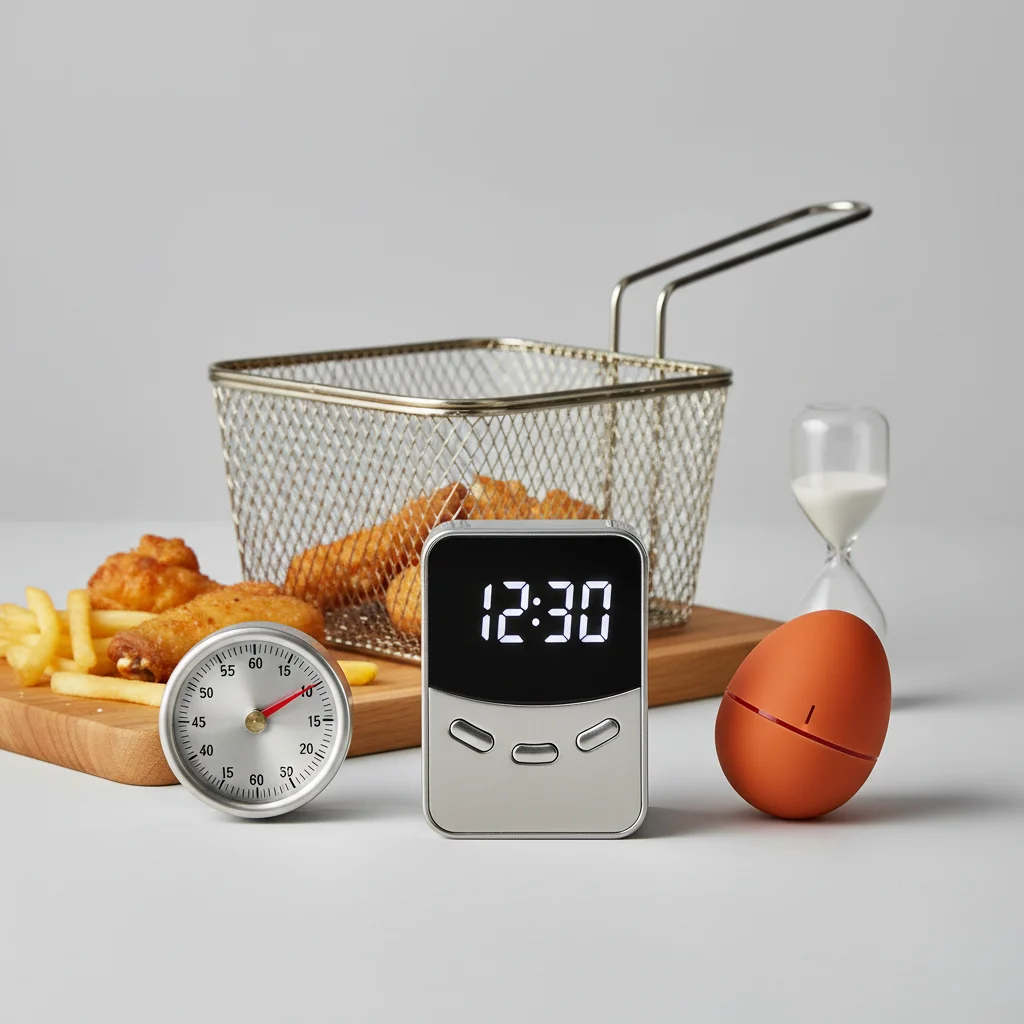
Deep fryer timers are not strictly necessary for every frying task, but they can significantly enhance precision and convenience, especially for achieving consistent results. While many deep fryers include built-in timers, external timers offer greater flexibility and accuracy for specific recipes.
Why Use a Deep Fryer Timer?
Using a dedicated timer for your deep frying can prevent overcooking or undercooking, leading to perfectly crispy food every time. It frees you from constantly monitoring the clock, allowing you to focus on other aspects of your meal preparation. For delicate items like fish or specific cuts of chicken, precise timing is crucial to avoid a dry or rubbery texture.
Types of Deep Fryer Timers
There are several types of timers suitable for deep frying. Many modern electric deep fryers come with integrated digital timers that can be set for various durations. For those with older models or outdoor fryers, external options include simple mechanical kitchen timers, digital timers with magnetic backs, and even smart timers that connect to your phone. Each type offers different levels of functionality and ease of use.
- Integrated digital timers (built into the fryer)
- Standalone mechanical timers (simple and reliable)
- Digital kitchen timers (often with alarms and multiple settings)
- Smart timers (app-controlled for advanced features)
- Oven timers (can be repurposed for frying tasks)
Setting the Right Time for Different Foods
|
Our Picks for the Best Deep Fryer in 2026
As an Amazon Associate I earn from qualifying purchases.
|
||
| Num | Product | Action |
|---|---|---|
| 1 | Hamilton Beach 35032 Professional Style Electric Deep Fryer, Frying Basket with Hooks, 1500 Watts, 3 Liters, Stainless Steel |

|
| 2 | Elite Gourmet Electric Deep Fryer, 4.5 Qt Total Oil Capacity (Dual 2-Qt Split Baskets), 1700 Watts, Stainless Steel, Separates Foods for Simultaneous Cooking, Stainless Steel |
|
| 3 | Secura 4 Liters / 17-Cup Stainless-Steel 1700-Watt Electric Deep Fryer with Timer Free Extra Odor Filter, Triple Basket, 4.5 Quarts, Silver |
|
| 4 | Alpha Living Electric Deep Fryer – 4.5L Deep Fryer with Basket with 2-Quart and 4-Quart Baskets – High-Grade Stainless Steel – Temperature Control and Timer – Ideal for Fried Chicken, Fries |
|
| 5 | West Bend Deep Fryer with Adjustable Temperature Control Nonstick Basket Easy-View Window and Temperature Guide, Folding Handle and Locking Cover for Easy Storage, 3-Liter, Silver |
|
| 6 | Secura 4 Liters / 17-Cup Stainless-Steel 1700-Watt Electric Deep Fryer with Timer Free Extra Odor Filter, Triple Basket, 4.5 Quarts, Black |
|
| 7 | Hamilton Beach Cool Touch Electric Deep Fryer with Basket and Lid, 2 Liters / 8 Cups Oil Capacity, Adjustable Temperature, 1500 Watts for Fast Heat-up, viewing Window Easy to Clean, Black (35021) |
|
| 8 | Hamilton Beach Electric Deep Fryer with 3 Baskets and Lid, 4.5 Liters / 19 Cups Oil Capacity, Temperature Control, View Window, Professional Style, 1800 Watts, Stainless Steel (35034) |
|
| 9 | Chefman 4.5 Liter Deep Fryer w/Basket Strainer, XL Jumbo Size, Adjustable Temperature & Timer, Perfect for Fried Chicken, Shrimp, French Fries, Chips & More, Removable Oil-Container, Stainless Steel |
|
| 10 | T-fal 3.5L Stainless Steel Deep Fryer with Basket for Home Use, 1700W, Deep Fryer with Oil Filtration, Temp Control, Digital Timer |
|
The ideal frying time varies greatly depending on the food item, its size, and the oil temperature. For example, thin-cut french fries might take 3-5 minutes at 350°F (175°C), while a larger piece of fried chicken could require 8-12 minutes at the same temperature. Always refer to recipe guidelines or the food’s packaging for recommended frying times. A good timer helps you adhere to these recommendations precisely.
For optimal results, consider using a timer in conjunction with a reliable deep fryer thermometer. This combination ensures both the correct temperature and duration, which are the two most critical factors for successful deep frying.
Features to Look for in a Deep Fryer Timer
When selecting a deep fryer timer, consider features like a loud alarm, a clear display, and ease of setting. Water resistance is a bonus for kitchen environments. For outdoor deep frying, a timer with a strong magnet or clip can be very useful for attaching it to the fryer or a nearby surface. Some advanced timers offer multiple countdowns, which is handy if you’re frying different items simultaneously.
Ultimately, while a timer isn’t a mandatory accessory for deep frying, it’s a valuable tool that can elevate your cooking precision and consistency. Investing in a good quality timer, whether integrated or external, can make a noticeable difference in the quality of your fried foods.

I got one of those deep fryers with a built-in timer, and while it’s okay, I find it a bit fiddly to set. It’s not as intuitive as I’d hoped, and sometimes I just end up using my phone timer instead. For delicate items like fish, I really need something more precise, so I might look into a separate, more accurate one.
I used to always guess with my frying times, and my chicken would sometimes come out a little dry. Since I started using an external digital timer, like the post suggested, my fried chicken has been perfectly crispy and juicy every single time. It really does free you up to do other things in the kitchen without worrying about overcooking.
My old deep fryer didn’t have a timer, and I was constantly checking the clock. It was such a hassle, especially when I was making a big batch of fries for a party. Now with my new electric deep fryer that has an integrated timer, it’s so much easier to get consistent results and focus on the rest of the meal.
I never thought much about deep fryer timers until I tried making homemade potato chips. Getting them just right, not burnt but perfectly crisp, was a challenge. Using a dedicated timer made a huge difference. It’s great for those specific recipes where a few seconds can really change the outcome.