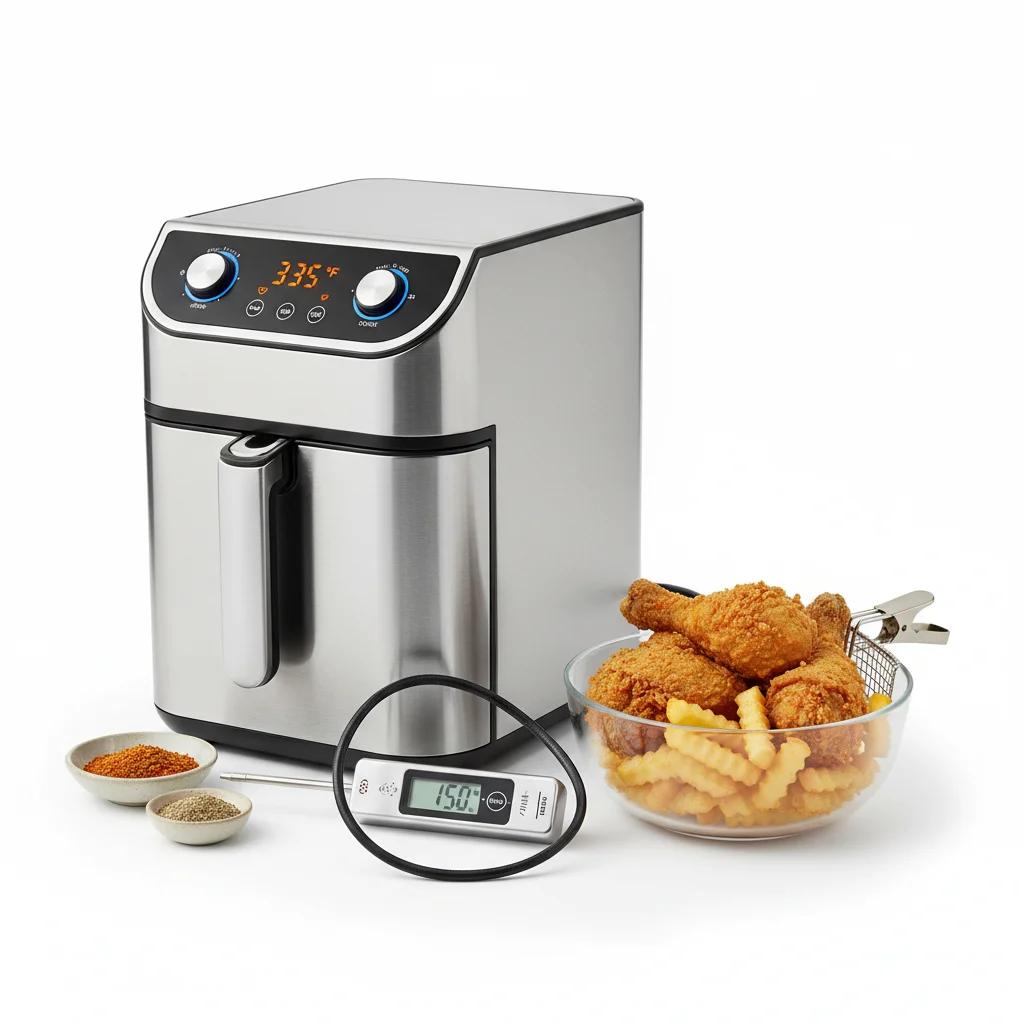
Achieving precise deep fryer temperature control is crucial for perfectly cooked, crispy food, with the ideal range for most deep-frying applications being 325°F to 375°F (160°C to 190°C). Maintaining this specific temperature range prevents food from becoming soggy and oil-soaked or developing burnt exteriors with raw interiors. Specific foods, such as French fries or chicken, require slight variations within this range to ensure optimal texture and doneness.
Understanding the Science of Frying Temperatures
When food is immersed in hot oil, moisture on its surface rapidly vaporizes, creating a protective barrier that prevents excessive oil absorption. This process, known as the Maillard reaction, is responsible for the golden-brown color and crispy texture. If the oil is too cool, food absorbs too much oil, becoming greasy. If it’s too hot, the exterior burns before the interior cooks through. Different foods have different moisture content and density, necessitating varied temperature settings for the best outcome. For see our deep fryers recommendations on this site.
Essential Tools for Accurate Temperature Monitoring
Reliable temperature monitoring is non-negotiable for consistent deep-frying. While many modern deep fryers come with built-in thermostats, an external thermometer provides an extra layer of accuracy. Digital thermometers with long probes are highly recommended, offering quick and precise readings. Ensure your thermometer is calibrated regularly to avoid discrepancies.
Tips for Maintaining Consistent Oil Temperature
|
Our Picks for the Best Deep Fryer in 2026
As an Amazon Associate I earn from qualifying purchases.
|
||
| Num | Product | Action |
|---|---|---|
| 1 | Secura 4 Liters / 17-Cup Stainless-Steel 1700-Watt Electric Deep Fryer with Timer Free Extra Odor Filter, Triple Basket, 4.5 Quarts, Silver |

|
| 2 | Alpha Living Electric Deep Fryer – 4.5L Deep Fryer with Basket with 2-Quart and 4-Quart Baskets – High-Grade Stainless Steel – Temperature Control and Timer – Ideal for Fried Chicken, Fries |
|
| 3 | Chefman 4.5 Liter Deep Fryer w/Basket Strainer, XL Jumbo Size, Adjustable Temperature & Timer, Perfect for Fried Chicken, Shrimp, French Fries, Chips & More, Removable Oil-Container, Stainless Steel |
|
| 4 | Hamilton Beach 35032 Professional Style Electric Deep Fryer, Frying Basket with Hooks, 1500 Watts, 3 Liters, Stainless Steel |
|
| 5 | T-fal 3.5L Stainless Steel Deep Fryer with Basket for Home Use, 1700W, Deep Fryer with Oil Filtration, Temp Control, Digital Timer |
|
| 6 | West Bend Deep Fryer with Adjustable Temperature Control Nonstick Basket Easy-View Window and Temperature Guide, Folding Handle and Locking Cover for Easy Storage, 3-Liter, Silver |
|
| 7 | Hamilton Beach Cool Touch Electric Deep Fryer with Basket and Lid, 2 Liters / 8 Cups Oil Capacity, Adjustable Temperature, 1500 Watts for Fast Heat-up, viewing Window Easy to Clean, Black (35021) |
|
| 8 | Hamilton Beach Electric Deep Fryer with 3 Baskets and Lid, 4.5 Liters / 19 Cups Oil Capacity, Temperature Control, View Window, Professional Style, 1800 Watts, Stainless Steel (35034) |
|
| 9 | Secura 4 Liters / 17-Cup Stainless-Steel 1700-Watt Electric Deep Fryer with Timer Free Extra Odor Filter, Triple Basket, 4.5 Quarts, Black |
|
| 10 | Elite Gourmet Electric Deep Fryer, 4.5 Qt Total Oil Capacity (Dual 2-Qt Split Baskets), 1700 Watts, Stainless Steel, Separates Foods for Simultaneous Cooking, Stainless Steel |
|
Maintaining a stable oil temperature throughout the frying process is key. Avoid overcrowding the fryer basket, as this significantly drops the oil temperature, leading to greasy food. Fry in small batches to allow the oil to recover its heat between additions. Always preheat your oil to the target temperature before adding food, and monitor it closely, adjusting the heat source as needed. Stirring the oil occasionally can also help distribute heat evenly.
Common Temperature Ranges for Popular Fried Foods
- French Fries: 325-350°F (160-175°C) for a double-fry method (lower for first fry, higher for second).
- Chicken (Bone-in): 325-350°F (160-175°C), ensuring internal temperature reaches 165°F (74°C).
- Doughnuts/Fritters: 350-375°F (175-190°C) for a golden exterior and cooked center.
- Fish Fillets: 350-375°F (175-190°C) for a crispy coating and flaky interior.
- Onion Rings: 350-375°F (175-190°C) for a light, crispy texture.
These ranges serve as a general guide; always refer to specific recipe instructions for optimal results. Adjustments may be necessary based on the size and thickness of the food items.
Troubleshooting Temperature Fluctuations
Even with careful monitoring, temperature fluctuations can occur. If the oil temperature drops too low, increase the heat slightly and wait for it to recover before adding more food. If it gets too hot, reduce the heat and remove the basket temporarily if necessary to prevent burning. Using a deep fryer with a powerful heating element can help minimize these fluctuations, especially when frying larger quantities.
The Impact of Oil Type on Temperature Management
The type of oil you use also plays a role in temperature management. Oils with high smoke points, such as peanut, canola, or vegetable oil, are ideal for deep frying because they can withstand high temperatures without breaking down and imparting off-flavors. Avoid oils with low smoke points, like olive oil, as they will degrade quickly and produce smoke, affecting both the taste and safety of your food. Always ensure your oil is fresh and clean for the best frying results.
Frequently Asked Questions
What is the ideal temperature range for deep frying most foods?
The ideal temperature range for most deep-frying applications is between 325u00b0F and 375u00b0F (160u00b0C to 190u00b0C). Maintaining this range ensures food cooks thoroughly without becoming greasy or burnt.
Why is consistent oil temperature important for deep frying?
Consistent oil temperature is crucial because it prevents excessive oil absorption and promotes the Maillard reaction, which creates a golden-brown, crispy texture. Fluctuations can lead to soggy or burnt food.
What tools are essential for monitoring deep fryer temperature accurately?
An external digital thermometer with a long probe is essential for accurate temperature monitoring, even if your deep fryer has a built-in thermostat. Regular calibration ensures precise readings.
How can I prevent oil temperature from dropping too much when frying?
To prevent significant oil temperature drops, avoid overcrowding the fryer basket and fry food in small batches. This allows the oil to recover its heat between additions, maintaining consistency.
Which types of oil are best for deep frying and why?
Oils with high smoke points, such as peanut, canola, or vegetable oil, are best for deep frying. They can withstand high temperatures without breaking down, ensuring better taste and safety.
Achieve Perfect Deep Fryer Temperature Control
Learn how to maintain consistent oil temperature for perfectly fried, crispy food every time.
Always preheat your chosen high smoke point oil to the specific target temperature for your food, typically between 325u00b0F and 375u00b0F. Use a reliable digital thermometer to confirm the oil has reached the desired heat before adding any food.
Continuously monitor the oil temperature using a calibrated digital thermometer throughout the frying process. Adjust the heat source as needed to keep the oil within the recommended range for your specific food item.
Avoid overcrowding the fryer basket, as adding too much food at once will significantly drop the oil temperature. Fry in small, manageable batches to allow the oil to quickly recover its heat between additions, preventing greasy results.
If the oil temperature drops too low, slightly increase the heat and wait for it to recover before adding more food. If it gets too hot, reduce the heat or temporarily remove the basket to prevent burning and ensure even cooking.

I always wondered why my fried foods were either too oily or too dark. The explanation about moisture vaporizing and creating a barrier was a game-changer for me. Now I understand the science behind it and can adjust my technique for different foods. My onion rings have never been better!
This really clarified why my fried chicken sometimes came out burnt on the outside and raw inside. I was definitely letting my oil get too hot. Sticking to the recommended 160°C to 190°C range has made a huge difference in getting that perfect golden-brown color and cooked-through interior. Thanks for the breakdown!
The information on temperature control for chicken was helpful, but I found my deep fryer still struggles to maintain a consistent heat, especially when I add a lot of food. It tends to drop below the ideal range, making things a bit greasy. I might need to invest in a better thermometer.
I used to struggle so much with soggy fries, but after reading about the 325°F to 375°F range, my homemade French fries are finally perfect! The tip about the Maillard reaction really helped me understand why temperature is so important. My family can’t get enough of the crispy texture now.