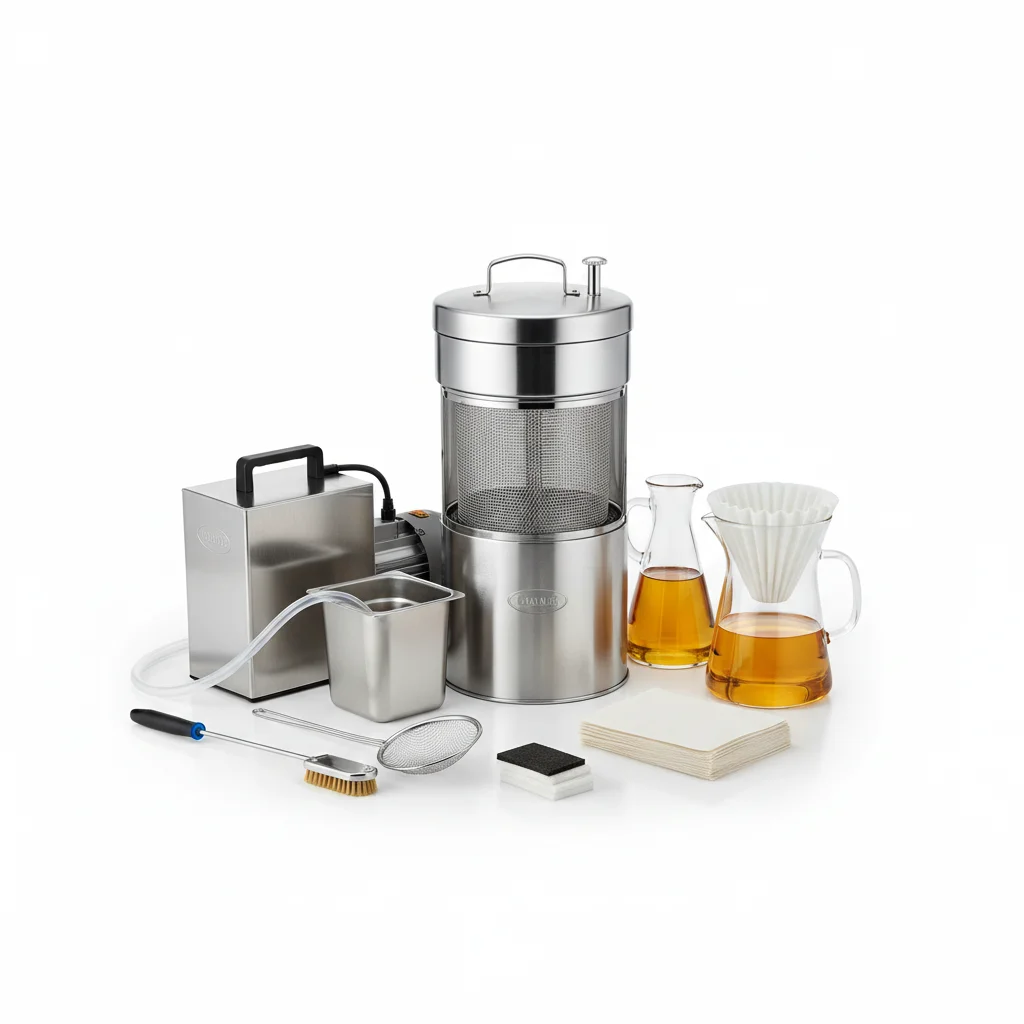
Deep fryer oil filtration systems can significantly extend the life of your cooking oil, potentially saving you money and reducing waste. For home users, a good filtration system can make your oil last up to 3-4 times longer than unfiltered oil, depending on usage and food type.
Understanding Oil Filtration Systems
Oil filtration systems for deep fryers are designed to remove food particles, crumbs, and other impurities that accumulate in cooking oil during frying. These systems typically use a fine mesh or paper filter to separate solids from the liquid oil, leaving the oil cleaner and ready for reuse. This process not only improves the taste and quality of subsequent fried foods but also slows down the degradation of the oil itself.
There are various types of filtration systems available, ranging from simple manual filters to integrated automatic systems found in more advanced deep fryers. Manual systems often involve pouring cooled oil through a filter, while automatic systems can filter oil with the press of a button, sometimes even while the oil is still warm.
Benefits of Using an Oil Filtration System
The primary benefit of an oil filtration system is the extended lifespan of your cooking oil. By removing contaminants, the oil breaks down slower, meaning you don’t have to replace it as frequently. This translates directly into cost savings over time, especially for those who deep fry regularly. Furthermore, cleaner oil results in better-tasting food, free from the burnt or stale flavors that can develop from degraded oil.
Another advantage is the environmental impact. Less frequent oil changes mean less used oil to dispose of, contributing to a more sustainable cooking practice. It also simplifies the cleanup process, as you’re dealing with cleaner oil and less residue in your fryer.
- Extends oil life by up to 3-4 times.
- Improves food taste and quality.
- Reduces cooking oil expenses.
- Minimizes environmental waste.
- Simplifies deep fryer cleaning.
Types of Deep Fryer Oil Filtration Systems
|
Our Picks for the Best Deep Fryer in 2026
As an Amazon Associate I earn from qualifying purchases.
|
||
| Num | Product | Action |
|---|---|---|
| 1 | West Bend Deep Fryer with Adjustable Temperature Control Nonstick Basket Easy-View Window and Temperature Guide, Folding Handle and Locking Cover for Easy Storage, 3-Liter, Silver |

|
| 2 | T-fal 3.5L Stainless Steel Deep Fryer with Basket for Home Use, 1700W, Deep Fryer with Oil Filtration, Temp Control, Digital Timer |
|
| 3 | Alpha Living Electric Deep Fryer – 4.5L Deep Fryer with Basket with 2-Quart and 4-Quart Baskets – High-Grade Stainless Steel – Temperature Control and Timer – Ideal for Fried Chicken, Fries |
|
| 4 | Elite Gourmet Electric Deep Fryer, 4.5 Qt Total Oil Capacity (Dual 2-Qt Split Baskets), 1700 Watts, Stainless Steel, Separates Foods for Simultaneous Cooking, Stainless Steel |
|
| 5 | Hamilton Beach Electric Deep Fryer with 3 Baskets and Lid, 4.5 Liters / 19 Cups Oil Capacity, Temperature Control, View Window, Professional Style, 1800 Watts, Stainless Steel (35034) |
|
| 6 | Secura 4 Liters / 17-Cup Stainless-Steel 1700-Watt Electric Deep Fryer with Timer Free Extra Odor Filter, Triple Basket, 4.5 Quarts, Black |
|
| 7 | Secura 4 Liters / 17-Cup Stainless-Steel 1700-Watt Electric Deep Fryer with Timer Free Extra Odor Filter, Triple Basket, 4.5 Quarts, Silver |
|
| 8 | Hamilton Beach 35032 Professional Style Electric Deep Fryer, Frying Basket with Hooks, 1500 Watts, 3 Liters, Stainless Steel |
|
| 9 | Hamilton Beach Cool Touch Electric Deep Fryer with Basket and Lid, 2 Liters / 8 Cups Oil Capacity, Adjustable Temperature, 1500 Watts for Fast Heat-up, viewing Window Easy to Clean, Black (35021) |
|
| 10 | Chefman 4.5 Liter Deep Fryer w/Basket Strainer, XL Jumbo Size, Adjustable Temperature & Timer, Perfect for Fried Chicken, Shrimp, French Fries, Chips & More, Removable Oil-Container, Stainless Steel |
|
Deep fryer oil filtration systems generally fall into two main categories: standalone units and integrated systems. Standalone units are separate devices where you manually pour cooled oil for filtration. These are often more affordable and versatile, as they can be used with any deep fryer. Integrated systems, on the other hand, are built directly into the deep fryer itself, offering convenience and often automatic operation. Some high-end models even feature pumps that circulate and filter the oil without manual intervention.
When choosing a system, consider the volume of oil you typically use and how often you fry. For occasional use, a simple manual filter might suffice. For frequent frying or larger quantities, an integrated or more robust standalone system could be a worthwhile investment.
Maintenance and Best Practices
To get the most out of your deep fryer oil filtration system, proper maintenance is crucial. Always ensure the oil is cooled to a safe temperature before filtering, especially with manual systems. Regularly clean the filter components according to the manufacturer’s instructions to prevent clogs and maintain efficiency. For systems with disposable filters, keep a supply on hand. Even with filtration, oil will eventually degrade and need to be replaced; filtration merely postpones this necessity. Pay attention to the oil’s color, smell, and foaming behavior as indicators of when it’s truly time for a fresh batch.
Are They Worth the Investment?
For home cooks who deep fry regularly, investing in a deep fryer oil filtration system is generally worth it. The initial cost of the system or a fryer with an integrated filter is often offset by the savings on cooking oil over time. Beyond the financial aspect, the improved food quality and reduced environmental impact make a strong case for their value. Consider your frying habits and budget to determine the best fit for your kitchen.

I was skeptical about how much a filtration system could really help, but after getting one, I’m a total convert. My oil definitely lasts 3-4 times longer now, just like it said. It’s amazing how much cleaner the oil looks after filtering, and my fried chicken tastes consistently great every time. Definitely worth the investment for anyone who deep fries regularly.
The idea of extending oil life is great, and I do see some benefit from using a paper filter system. However, I found that for really fine particles, it doesn’t always catch everything. I still get some sediment at the bottom of my oil container. It’s better than nothing, but I was hoping for a more pristine result, especially after frying heavily breaded items.
I used to hate how quickly I had to toss out my deep fryer oil, feeling like I was wasting so much. Since getting an integrated automatic system with my new fryer, it’s been a game-changer. The oil stays so much cleaner, and I’ve saved a ton of money not having to buy new oil as often. Plus, the food tastes better because the oil isn’t breaking down as fast.
I picked up a manual filter system a few weeks ago and it’s been pretty good. It’s a bit of a process to filter the oil after each use, but the improvement in oil life is noticeable. I’ve been frying a lot of fish lately, and before, the oil would get cloudy fast. Now, it stays much clearer. I just wish it was a little less messy to transfer the oil.