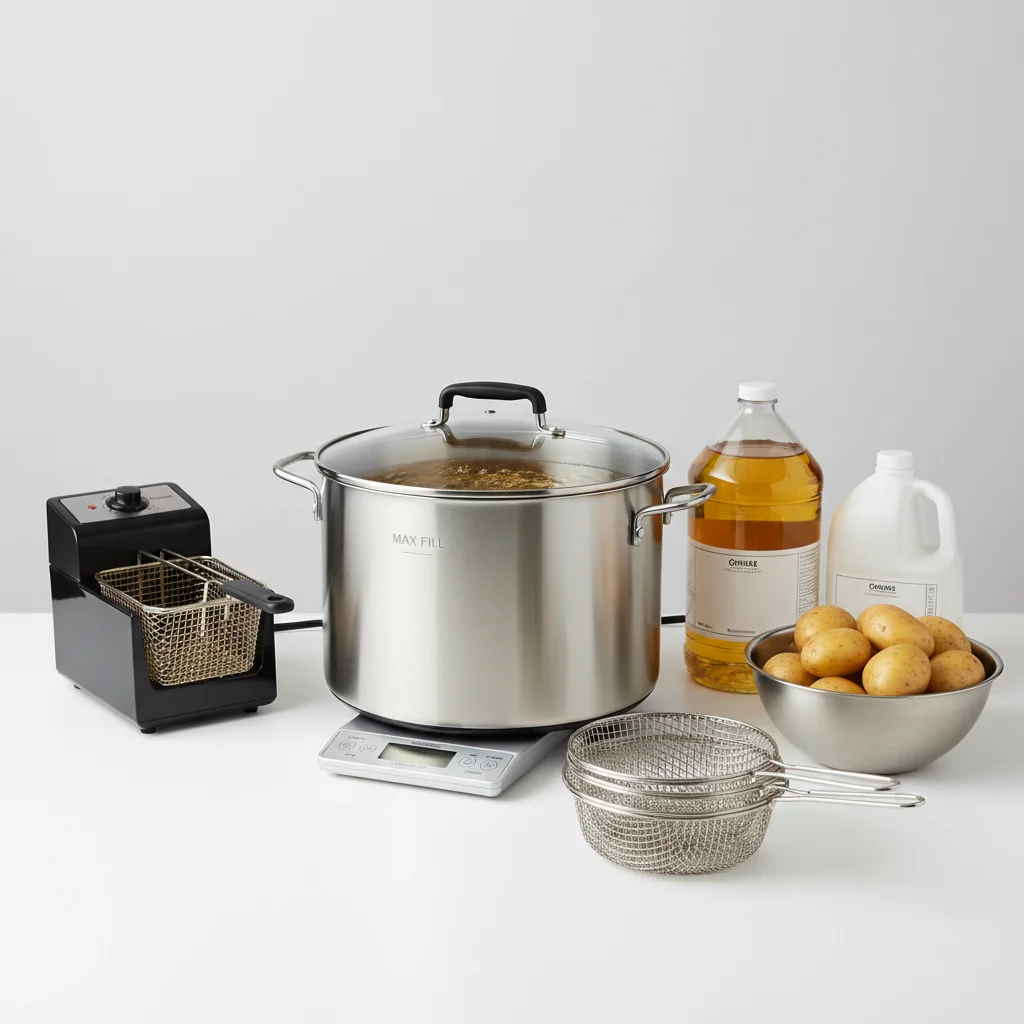
For most home cooks, a deep fryer with a 3- to 4-quart oil capacity is ideal, offering a balance between cooking volume and oil management for small to medium-sized families. This capacity prevents excessive oil waste and prolonged heating times, ensuring efficient and safe frying. Understanding the appropriate oil capacity is crucial for achieving consistent results and managing oil consumption effectively.
Factors Influencing Your Ideal Oil Capacity
Several factors should guide your decision when choosing a deep fryer based on its oil capacity. Consider the typical portion sizes you prepare and the number of people you usually cook for. A larger family or frequent entertaining might necessitate a fryer with a 5- to 6-quart capacity, allowing for bigger batches of food like chicken wings or fish fillets. Conversely, a smaller household or occasional frying might find a 2-quart model sufficient, saving on oil costs and storage space. For best deep fryers roundups on this site.
Common Deep Fryer Oil Capacities and Their Uses
Deep fryers come in a range of capacities, each suited for different needs. Small, compact fryers often hold 1 to 2 quarts of oil, perfect for single servings or small snacks like onion rings. Medium-sized fryers, typically 3 to 4 quarts, are the most versatile for everyday family use, handling everything from French fries to donuts. Larger models, 5 quarts and above, are designed for bigger tasks, such as frying whole chickens or turkeys, and are often preferred for outdoor cooking or large gatherings.
Benefits of Matching Capacity to Your Needs
|
Our Picks for the Best Deep Fryer in 2026
As an Amazon Associate I earn from qualifying purchases.
|
||
| Num | Product | Action |
|---|---|---|
| 1 | West Bend Deep Fryer with Adjustable Temperature Control Nonstick Basket Easy-View Window and Temperature Guide, Folding Handle and Locking Cover for Easy Storage, 3-Liter, Silver |

|
| 2 | Hamilton Beach Electric Deep Fryer with 3 Baskets and Lid, 4.5 Liters / 19 Cups Oil Capacity, Temperature Control, View Window, Professional Style, 1800 Watts, Stainless Steel (35034) |
|
| 3 | Alpha Living Electric Deep Fryer – 4.5L Deep Fryer with Basket with 2-Quart and 4-Quart Baskets – High-Grade Stainless Steel – Temperature Control and Timer – Ideal for Fried Chicken, Fries |
|
| 4 | Hamilton Beach 35032 Professional Style Electric Deep Fryer, Frying Basket with Hooks, 1500 Watts, 3 Liters, Stainless Steel |
|
| 5 | Secura 4 Liters / 17-Cup Stainless-Steel 1700-Watt Electric Deep Fryer with Timer Free Extra Odor Filter, Triple Basket, 4.5 Quarts, Black |
|
| 6 | Secura 4 Liters / 17-Cup Stainless-Steel 1700-Watt Electric Deep Fryer with Timer Free Extra Odor Filter, Triple Basket, 4.5 Quarts, Silver |
|
| 7 | Elite Gourmet Electric Deep Fryer, 4.5 Qt Total Oil Capacity (Dual 2-Qt Split Baskets), 1700 Watts, Stainless Steel, Separates Foods for Simultaneous Cooking, Stainless Steel |
|
| 8 | Hamilton Beach Cool Touch Electric Deep Fryer with Basket and Lid, 2 Liters / 8 Cups Oil Capacity, Adjustable Temperature, 1500 Watts for Fast Heat-up, viewing Window Easy to Clean, Black (35021) |
|
| 9 | T-fal 3.5L Stainless Steel Deep Fryer with Basket for Home Use, 1700W, Deep Fryer with Oil Filtration, Temp Control, Digital Timer |
|
| 10 | Chefman 4.5 Liter Deep Fryer w/Basket Strainer, XL Jumbo Size, Adjustable Temperature & Timer, Perfect for Fried Chicken, Shrimp, French Fries, Chips & More, Removable Oil-Container, Stainless Steel |
|
Choosing the right oil capacity offers several advantages. It prevents overfilling, which can lead to dangerous oil spills and potential fires. It also ensures that your food is submerged properly, leading to even cooking and a consistent crispy texture. Furthermore, selecting a fryer with an appropriate capacity helps manage oil consumption, reducing waste and the frequency of oil changes. An undersized fryer might require multiple batches, extending cooking time, while an oversized one wastes oil and takes longer to heat up.
Tips for Managing Deep Fryer Oil
Regardless of your deep fryer’s capacity, proper oil management is key to successful frying. Always ensure the oil level is between the minimum and maximum fill lines indicated by the manufacturer. Use high-smoke-point oils like peanut, canola, or vegetable oil for best results. After each use, allow the oil to cool completely before filtering it to remove food particles, which extends its lifespan. Store filtered oil in an airtight container in a cool, dark place.
Maintaining Optimal Oil Levels for Performance
Maintaining the correct oil level is not just about safety; it also directly impacts the performance of your deep fryer and the quality of your fried food. Too little oil can cause food to cook unevenly or burn, while too much oil can overflow when food is added, creating a hazardous situation. Always consult your deep fryer’s manual for specific recommendations on oil levels and types. Regular checks and top-ups are essential, especially during extended frying sessions, as some oil will be absorbed by the food.
- Check oil level before each use.
- Use oils with a high smoke point.
- Filter oil after it cools down.
- Store used oil properly in an airtight container.
- Never mix old and new oil.
Frequently Asked Questions
What is the ideal deep fryer oil capacity for a typical family?
For most home cooks and small to medium-sized families, a deep fryer with a 3- to 4-quart oil capacity is ideal. This size offers a good balance for preparing common meals without excessive oil waste or long heating times.
How does oil capacity affect deep fryer performance and safety?
The correct oil capacity ensures food is submerged properly for even cooking and consistent texture, while preventing dangerous oil spills from overfilling. It also helps manage oil consumption, reducing waste and the frequency of oil changes.
What are the common deep fryer oil capacities and their uses?
Deep fryers typically range from 1 to 2 quarts for single servings, 3 to 4 quarts for versatile family use, and 5 quarts or more for larger tasks like frying whole turkeys or for big gatherings. Each size is suited for different cooking volumes.
What types of oil are best for deep frying?
For best results in deep frying, use high-smoke-point oils such as peanut, canola, or vegetable oil. These oils can withstand the high temperatures required for frying without breaking down quickly.
How should I store used deep fryer oil to extend its lifespan?
After each use, allow the oil to cool completely, then filter it to remove food particles. Store the filtered oil in an airtight container in a cool, dark place to extend its lifespan and maintain its quality for future use.

I was always hesitant about deep frying because of the oil waste. But after reading about managing oil consumption effectively, I decided to try a 4-quart fryer. It’s been fantastic! I can make fish fillets and still feel like I’m not overdoing it with the oil. Great for consistent results too.
I used to struggle with my old fryer, always running out of space when making chicken wings for game night. Upgrading to a 5-quart model was a game-changer! Now I can fry enough for everyone in one go without overcrowding. It really makes a difference for bigger batches.
The advice about a 3- to 4-quart capacity for home cooks is spot on. I got a 3.5-quart fryer a few months ago, and it’s perfect for my family of four. It heats up pretty quickly and I don’t feel like I’m wasting a ton of oil. Definitely recommend this size for everyday use.
I went with a 2-quart model because I only fry occasionally, mostly just fries for myself. While it’s fine for small portions, I sometimes wish I had a little more room. Frying anything larger than a single serving can be a bit tricky, and it feels a little cramped. Next time I might go for a 3-quart.