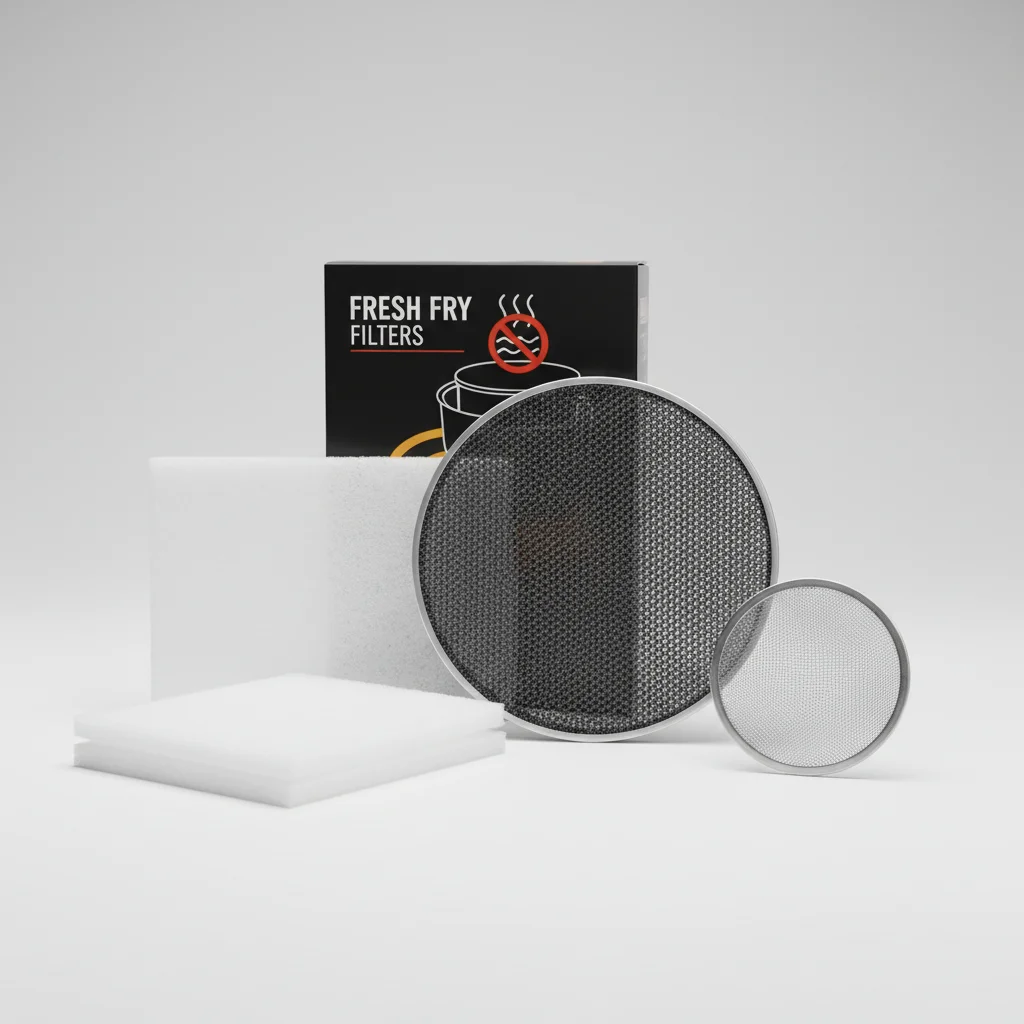
Deep fryer filters can significantly reduce cooking odors, with activated carbon filters being the most effective, often cutting down noticeable smells by up to 70%. While no filter can eliminate all odors, especially with strong-smelling foods like fish, a good filtration system makes a noticeable difference in maintaining a fresh kitchen environment. These filters work by trapping airborne grease particles and absorbing volatile organic compounds responsible for unpleasant smells.
How Deep Fryer Filters Work
Deep fryer filters typically employ a multi-layered approach to combat odors. The first layer often consists of a mesh or foam material designed to trap larger grease particles. This prevents them from circulating in the air and settling on surfaces. Following this, an activated carbon layer is crucial. Activated carbon is highly porous and has a large surface area, allowing it to adsorb odor-causing molecules. As air passes through the carbon, these molecules bind to the carbon’s surface, effectively removing them from the air. For more deep fryers guides on this site.
Types of Deep Fryer Filters
There are several types of filters commonly found in deep fryers. Mesh filters are basic and primarily catch grease, offering minimal odor reduction. Foam filters provide a slightly better barrier for grease and some minor odor absorption. The most effective are activated carbon filters, which are specifically designed for odor control. Some advanced models combine these, using a mesh pre-filter to protect the activated carbon layer, extending its lifespan and efficiency. It’s important to check your fryer’s specifications to determine the type of filter it uses and its replacement schedule.
- Activated Carbon Filters: Best for odor absorption.
- Mesh Filters: Primarily for grease particle capture.
- Foam Filters: Offer some grease and minor odor control.
- Combination Filters: Utilize multiple layers for enhanced performance.
- Permanent Filters: Washable, but may lose effectiveness over time.
Maintaining and Replacing Filters
|
Our Picks for the Best Deep Fryer in 2026
As an Amazon Associate I earn from qualifying purchases.
|
||
| Num | Product | Action |
|---|---|---|
| 1 | Secura 4 Liters / 17-Cup Stainless-Steel 1700-Watt Electric Deep Fryer with Timer Free Extra Odor Filter, Triple Basket, 4.5 Quarts, Black |

|
| 2 | Hamilton Beach 35032 Professional Style Electric Deep Fryer, Frying Basket with Hooks, 1500 Watts, 3 Liters, Stainless Steel |
|
| 3 | Chefman 4.5 Liter Deep Fryer w/Basket Strainer, XL Jumbo Size, Adjustable Temperature & Timer, Perfect for Fried Chicken, Shrimp, French Fries, Chips & More, Removable Oil-Container, Stainless Steel |
|
| 4 | Hamilton Beach Electric Deep Fryer with 3 Baskets and Lid, 4.5 Liters / 19 Cups Oil Capacity, Temperature Control, View Window, Professional Style, 1800 Watts, Stainless Steel (35034) |
|
| 5 | Secura 4 Liters / 17-Cup Stainless-Steel 1700-Watt Electric Deep Fryer with Timer Free Extra Odor Filter, Triple Basket, 4.5 Quarts, Silver |
|
| 6 | Elite Gourmet Electric Deep Fryer, 4.5 Qt Total Oil Capacity (Dual 2-Qt Split Baskets), 1700 Watts, Stainless Steel, Separates Foods for Simultaneous Cooking, Stainless Steel |
|
| 7 | Hamilton Beach Cool Touch Electric Deep Fryer with Basket and Lid, 2 Liters / 8 Cups Oil Capacity, Adjustable Temperature, 1500 Watts for Fast Heat-up, viewing Window Easy to Clean, Black (35021) |
|
| 8 | Alpha Living Electric Deep Fryer – 4.5L Deep Fryer with Basket with 2-Quart and 4-Quart Baskets – High-Grade Stainless Steel – Temperature Control and Timer – Ideal for Fried Chicken, Fries |
|
| 9 | T-fal 3.5L Stainless Steel Deep Fryer with Basket for Home Use, 1700W, Deep Fryer with Oil Filtration, Temp Control, Digital Timer |
|
| 10 | West Bend Deep Fryer with Adjustable Temperature Control Nonstick Basket Easy-View Window and Temperature Guide, Folding Handle and Locking Cover for Easy Storage, 3-Liter, Silver |
|
To ensure your deep fryer filters remain effective, regular maintenance is essential. Mesh and foam filters, if washable, should be cleaned according to the manufacturer’s instructions, typically after every few uses. Activated carbon filters, however, are usually not washable and have a finite lifespan. Their effectiveness diminishes as they become saturated with odor molecules. Most manufacturers recommend replacing activated carbon filters every 3 to 6 months, depending on usage frequency. Failing to replace them will result in a noticeable increase in cooking odors.
Beyond Filters: Other Odor Reduction Strategies
While deep fryer filters are a primary defense against odors, they are part of a larger strategy. Proper ventilation is key; always use your deep fryer in a well-ventilated area, ideally under a range hood. Covering the fryer when not in use can also help contain residual smells. Additionally, using fresh oil and changing it regularly prevents the buildup of stale, strong odors. For particularly pungent foods, consider frying outdoors if your fryer is designed for it.offers a range of deep fryers with advanced filtration systems, making them a great choice for odor-conscious cooks.
The Verdict on Deep Fryer Filters and Odor
Deep fryer filters, especially those with activated carbon, are highly effective in reducing cooking odors. They won’t eliminate every trace of smell, but they significantly improve the air quality in your kitchen, making deep frying a more pleasant experience. For optimal results, combine a good filtration system with proper ventilation and regular oil changes. Investing in a deep fryer with a robust filter system is a worthwhile consideration for anyone concerned about lingering cooking smells.provides replacement filters for many popular deep fryer models, ensuring you can maintain peak odor reduction performance.

I got a new filter for my deep fryer hoping it would completely eliminate the smell when I make wings. While it definitely helps, especially with the grease particles, I still notice a pretty strong odor, just not as bad. Maybe my expectations were too high for strong-smelling foods. It’s better than nothing, but not a total miracle worker.
The multi-layered approach these filters use really makes sense. I’ve been using a filter with a mesh layer and an activated carbon layer for a few weeks now, and it’s made a noticeable difference in my small apartment kitchen. Before, the smell of frying would just hang in the air and get on everything. Now, it’s much more manageable and doesn’t spread as far.
I was skeptical about deep fryer filters, but after reading about the activated carbon ones, I decided to give it a shot. We fry fish almost every Friday, and the smell used to linger for days. With the new filter, it’s a night and day difference. It really does cut down on the noticeable smells by a lot, probably around the 70% mark mentioned. My kitchen feels so much fresher now.