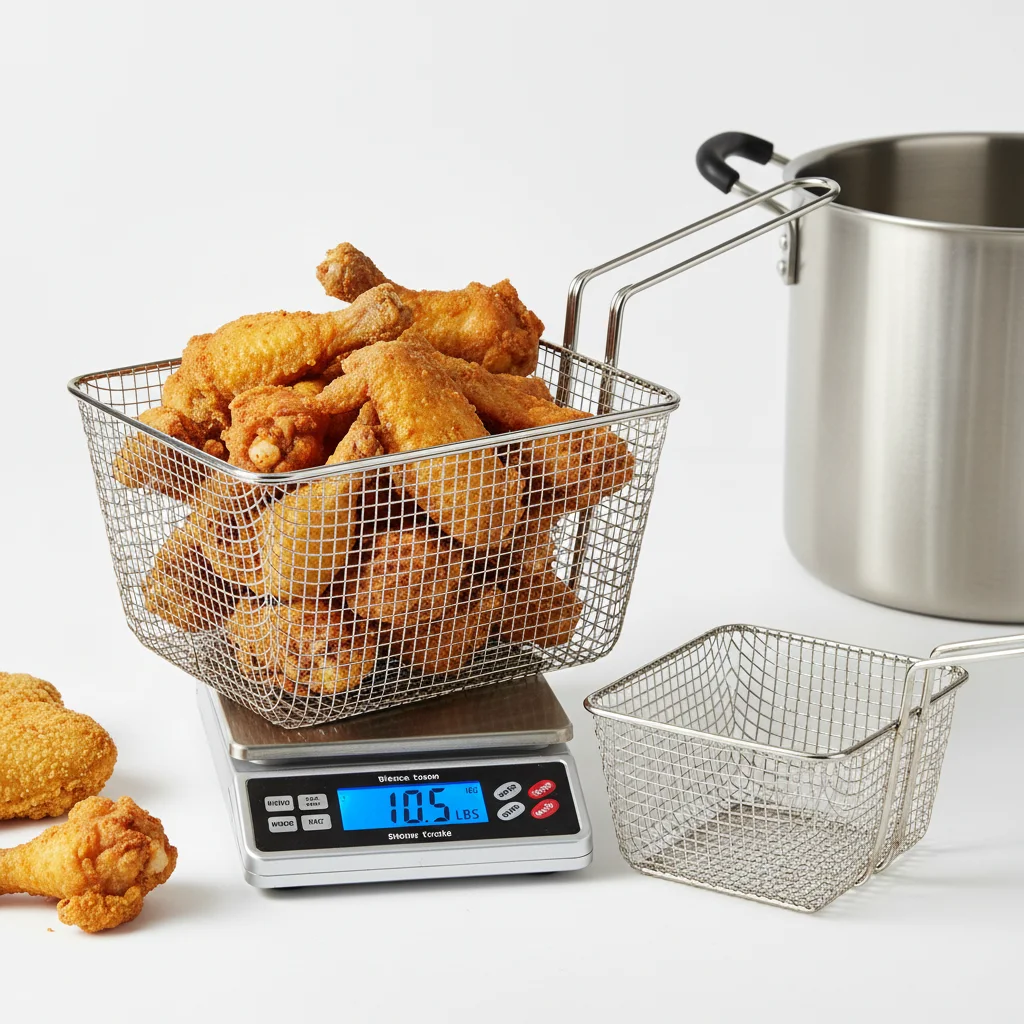
Understanding deep fryer basket capacity is crucial for efficient and safe frying. Most standard home deep fryer baskets can comfortably hold between 2 to 4 pounds of food per batch, ensuring even cooking and crispy results. This capacity varies significantly based on the fryer’s overall size and design, with larger models accommodating more and compact units designed for smaller portions.
Factors Influencing Basket Capacity
Several factors dictate how much food a deep fryer basket can effectively hold. The physical dimensions of the basket itself are primary, but the total oil capacity of the fryer also plays a critical role. Overfilling the basket can lead to a significant drop in oil temperature, resulting in greasy food and longer cooking times. Conversely, underfilling might not be efficient for larger meals. For expert deep fryers reviews on this site.
The type of food being fried also impacts practical capacity. Denser items like chicken pieces or fish fillets take up more space and require more oil displacement than lighter items like french fries or onion rings. Always consider the volume and density of your ingredients when loading the basket.
Standard Home Deep Fryer Basket Sizes
For typical home use, deep fryer baskets come in a range of sizes. Compact fryers often feature baskets designed for 1-2 pounds of food, ideal for single servings or small appetizers. Mid-sized fryers, which are most common, usually have baskets that handle 2-3 pounds. Larger family-sized or outdoor fryers can have baskets capable of holding 4-6 pounds, perfect for bigger gatherings or whole turkeys.
It’s always best to consult your deep fryer’s manual for its recommended maximum food capacity per basket. This information is usually provided to ensure optimal performance and safety.
Maximizing Your Deep Fryer Basket’s Potential
|
Our Picks for the Best Deep Fryer in 2026
As an Amazon Associate I earn from qualifying purchases.
|
||
| Num | Product | Action |
|---|---|---|
| 1 | T-fal 3.5L Stainless Steel Deep Fryer with Basket for Home Use, 1700W, Deep Fryer with Oil Filtration, Temp Control, Digital Timer |

|
| 2 | West Bend Deep Fryer with Adjustable Temperature Control Nonstick Basket Easy-View Window and Temperature Guide, Folding Handle and Locking Cover for Easy Storage, 3-Liter, Silver |
|
| 3 | Hamilton Beach 35032 Professional Style Electric Deep Fryer, Frying Basket with Hooks, 1500 Watts, 3 Liters, Stainless Steel |
|
| 4 | Chefman 4.5 Liter Deep Fryer w/Basket Strainer, XL Jumbo Size, Adjustable Temperature & Timer, Perfect for Fried Chicken, Shrimp, French Fries, Chips & More, Removable Oil-Container, Stainless Steel |
|
| 5 | Secura 4 Liters / 17-Cup Stainless-Steel 1700-Watt Electric Deep Fryer with Timer Free Extra Odor Filter, Triple Basket, 4.5 Quarts, Silver |
|
| 6 | Hamilton Beach Cool Touch Electric Deep Fryer with Basket and Lid, 2 Liters / 8 Cups Oil Capacity, Adjustable Temperature, 1500 Watts for Fast Heat-up, viewing Window Easy to Clean, Black (35021) |
|
| 7 | Secura 4 Liters / 17-Cup Stainless-Steel 1700-Watt Electric Deep Fryer with Timer Free Extra Odor Filter, Triple Basket, 4.5 Quarts, Black |
|
| 8 | Hamilton Beach Electric Deep Fryer with 3 Baskets and Lid, 4.5 Liters / 19 Cups Oil Capacity, Temperature Control, View Window, Professional Style, 1800 Watts, Stainless Steel (35034) |
|
| 9 | Alpha Living Electric Deep Fryer – 4.5L Deep Fryer with Basket with 2-Quart and 4-Quart Baskets – High-Grade Stainless Steel – Temperature Control and Timer – Ideal for Fried Chicken, Fries |
|
| 10 | Elite Gourmet Electric Deep Fryer, 4.5 Qt Total Oil Capacity (Dual 2-Qt Split Baskets), 1700 Watts, Stainless Steel, Separates Foods for Simultaneous Cooking, Stainless Steel |
|
To get the most out of your deep fryer basket, avoid overcrowding. Frying in smaller batches allows the oil temperature to recover quickly, leading to consistently crispy food. If you’re cooking for a crowd, consider a deep fryer with dual baskets or a larger single basket designed for higher volume.
Properly arranging food within the basket also helps. For items like chicken wings or fries, a single layer is often ideal to prevent sticking and promote even browning. For larger items, ensure there’s enough space around each piece for the hot oil to circulate.
- Always check the manufacturer’s recommended maximum fill line.
- Fry in batches to maintain oil temperature.
- Distribute food evenly within the basket.
- Consider food density when calculating capacity.
- Clean your basket regularly to prevent residue buildup.
Choosing the Right Basket for Your Needs
When purchasing a deep fryer or replacement basket, consider your typical cooking needs. If you frequently host large gatherings, a fryer with a higher basket capacity or multiple baskets will be more suitable. For everyday use or smaller households, a compact or mid-sized option might be more practical and energy-efficient.
Some deep fryers offer interchangeable baskets, allowing you to switch between a large single basket and two smaller ones, providing versatility for different cooking tasks.Look for baskets made from durable, food-grade materials like stainless steel for longevity and easy cleaning.
Safety Considerations for Basket Loading
Never fill your deep fryer basket beyond the recommended maximum fill line, even if it appears there’s more physical space. Overfilling can cause oil to overflow when the food is submerged, creating a significant fire hazard. Always lower the basket slowly into the hot oil to prevent splashing.
Ensure the food is as dry as possible before frying, as excess moisture can cause violent splattering and reduce the oil’s lifespan.Adhering to these safety guidelines will ensure a pleasant and secure deep-frying experience.

Good info on not dropping the oil temp too much. I have a compact unit and it’s definitely a challenge to fry for more than two people without doing multiple batches. I wish there were more options for slightly larger baskets without having to buy a huge, expensive fryer. Still, it’s good to know I’m not alone in that struggle.
This was super helpful for understanding why my batches weren’t cooking evenly. I have a larger model, and I thought I could just cram more in, but the oil capacity really does matter. Now I stick to the recommended pounds per batch and everything cooks beautifully. No more undercooked centers or burnt outsides!
The tip about denser items like chicken versus lighter items like onion rings really hit home. I used to just eyeball it, but now I’m more mindful of what I’m putting in. My fish and chips have been much more consistent since I started paying attention to the actual weight and type of food. Thanks for the breakdown!
I always struggled with greasy fries because I was overfilling my basket. This really helped me understand that the 2-4 pound range for home fryers is key. My last batch of chicken wings came out perfectly crispy, not soggy at all. It’s made a huge difference in my frying game!