The secret to consistently crispy, golden-brown fried foods isn’t just a great recipe; it’s the quality of your deep fryer oil. As a home cook, understanding when and how to properly manage your frying oil is paramount for both delicious results and kitchen efficiency. Reusing oil can save money and reduce waste, but there comes a point when it’s time for a refresh. Using degraded oil not only compromises the taste and texture of your culinary creations but can also pose health concerns.
This comprehensive DIY guide will navigate you through the essential aspects of deep fryer oil management. We’ll explore the critical factors that dictate how often you should change your oil, help you identify the tell-tale signs that your oil is past its prime, and provide actionable tips for extending its useful life and ensuring safe disposal. Get ready to elevate your deep-frying game and enjoy perfect results every time.
Understanding Deep Fryer Oil
Before diving into maintenance, it’s helpful to grasp what deep fryer oil is and its fundamental role in creating those irresistible fried dishes we all love.
What Deep Fryer Oil Is and How It Works
|
Our Picks for the Best Deep Fryer in 2026
As an Amazon Associate I earn from qualifying purchases.
|
||
| Num | Product | Action |
|---|---|---|
| 1 | Elite Gourmet Electric Deep Fryer, 4.5 Qt Total Oil Capacity (Dual 2-Qt Split Baskets), 1700 Watts, Stainless Steel, Separates Foods for Simultaneous Cooking, Stainless Steel |

|
| 2 | Hamilton Beach 35032 Professional Style Electric Deep Fryer, Frying Basket with Hooks, 1500 Watts, 3 Liters, Stainless Steel |
|
| 3 | Chefman 4.5 Liter Deep Fryer w/Basket Strainer, XL Jumbo Size, Adjustable Temperature & Timer, Perfect for Fried Chicken, Shrimp, French Fries, Chips & More, Removable Oil-Container, Stainless Steel |
|
| 4 | West Bend Deep Fryer with Adjustable Temperature Control Nonstick Basket Easy-View Window and Temperature Guide, Folding Handle and Locking Cover for Easy Storage, 3-Liter, Silver |
|
| 5 | Secura 4 Liters / 17-Cup Stainless-Steel 1700-Watt Electric Deep Fryer with Timer Free Extra Odor Filter, Triple Basket, 4.5 Quarts, Black |
|
| 6 | Alpha Living Electric Deep Fryer – 4.5L Deep Fryer with Basket with 2-Quart and 4-Quart Baskets – High-Grade Stainless Steel – Temperature Control and Timer – Ideal for Fried Chicken, Fries |
|
| 7 | T-fal 3.5L Stainless Steel Deep Fryer with Basket for Home Use, 1700W, Deep Fryer with Oil Filtration, Temp Control, Digital Timer |
|
| 8 | Secura 4 Liters / 17-Cup Stainless-Steel 1700-Watt Electric Deep Fryer with Timer Free Extra Odor Filter, Triple Basket, 4.5 Quarts, Silver |
|
| 9 | Hamilton Beach Electric Deep Fryer with 3 Baskets and Lid, 4.5 Liters / 19 Cups Oil Capacity, Temperature Control, View Window, Professional Style, 1800 Watts, Stainless Steel (35034) |
|
| 10 | Hamilton Beach Cool Touch Electric Deep Fryer with Basket and Lid, 2 Liters / 8 Cups Oil Capacity, Adjustable Temperature, 1500 Watts for Fast Heat-up, viewing Window Easy to Clean, Black (35021) |
|
Deep fryer oil is a cooking medium specifically chosen for its high smoke point and ability to withstand high temperatures without breaking down. When food is submerged in hot oil, typically between 350-375°F (176-190°C), the intense heat quickly cooks the surface, forming a crisp, golden crust. Simultaneously, the moisture within the food rapidly turns to steam, which cooks the food from the inside out and helps prevent excessive oil absorption. This rapid cooking process locks in flavor and moisture, delivering that desirable crispy exterior and tender interior.
Benefits of Properly Maintaining Deep Fryer Oil
Proper oil maintenance is more than just a chore; it’s a cornerstone of excellent deep-frying. Firstly, it ensures superior food quality. Fresh, clean oil delivers food that is crispy, evenly cooked, and free from undesirable odors or tastes. When oil degrades, it can impart rancid or burnt flavors, making your food greasy and unappetizing. Secondly, maintaining your oil contributes to healthier cooking by reducing the formation of harmful compounds that can occur when oil breaks down. Lastly, it extends the lifespan of your oil and your deep fryer, saving you money on replacements and repairs over time.
Common Types of Deep Fryer Oils for Home Use
Choosing the right oil is the first step towards successful deep frying. Oils with a high smoke point are ideal because they can endure the necessary high temperatures without burning. Popular choices for home deep frying include peanut oil, canola oil, sunflower oil, and avocado oil. Peanut oil offers a subtle nutty flavor and excellent stability, while canola oil is a versatile and affordable option with a neutral taste. High-oleic sunflower and avocado oils are also great for their stability and beneficial fatty acid profiles. Conversely, extra virgin olive oil and some unrefined vegetable oils have lower smoke points and are generally not recommended for deep frying, as they can break down quickly and impart off-flavors.
Factors Influencing Deep Fryer Oil Change Frequency
Determining precisely how often to change your deep fryer oil isn’t a one-size-fits-all answer. Several key factors contribute to how quickly oil degrades, and understanding them will help you make an informed decision for your home kitchen.
Usage Volume and Frequency
One of the most significant determinants of oil lifespan is simply how much and how often you use your deep fryer. If you’re a sporadic fryer, perhaps making French fries once a month, your oil will naturally last longer than if you deep-fry multiple times a week. Each cooking session subjects the oil to heat, oxygen, and food particles, all of which contribute to its breakdown. The more frequently the oil is heated and cooled, the faster it will degrade, necessitating more frequent changes.
Type of Food Fried
The type of food you deep-fry plays a crucial role in oil longevity. Breaded or battered foods, such as chicken nuggets, fish fillets, or onion rings, tend to shed more crumbs and particles into the oil. These particles burn and contaminate the oil, accelerating its degradation. Foods with high moisture content, marinated items, or sugary goods like donuts also speed up breakdown. In contrast, frying non-breaded items like plain French fries or vegetables generally allows the oil to last for more uses because they leave fewer impurities behind. If you frequently fry heavily breaded or messy foods, expect to change your oil more often.
Cooking Temperature
The temperature at which you fry directly impacts how quickly your oil breaks down. Consistently maintaining the optimal frying temperature—typically between 350-375°F (176-190°C)—is vital. Overheating the oil, even for short periods, drastically accelerates its degradation, causing it to break down faster and develop off-flavors. Conversely, if the oil temperature is too low, food will absorb more oil, resulting in a greasy, soggy product. Using an accurate oil thermometer and adjusting your deep fryer’s settings to maintain a steady temperature will help preserve the oil’s quality and extend its life.
 Chef examining oil in a deep fryer, considering food type and temperature
Oil Filtration and Fryer Cleanliness
Regular oil filtration is arguably the most impactful practice for extending the life of your deep fryer oil. Food particles, crumbs, and other debris left in the oil after frying will continue to cook and burn, contaminating the entire batch. Straining your oil after each use helps remove these impurities, significantly slowing down the degradation process. Beyond daily filtration, the overall cleanliness of your deep fryer itself matters. Residue and accumulated grease in the fryer basket, heating elements, and interior surfaces can transfer to fresh oil, causing it to degrade prematurely. Regular cleaning of the entire appliance is essential for optimal oil longevity.
Oil Type and Quality
The inherent quality and type of oil you choose from the start also influence how often you’ll need to change it. High-quality cooking oils with naturally high smoke points, such as refined peanut, canola, or sunflower oil, are designed to withstand the rigors of deep frying better than oils with lower smoke points or those rich in polyunsaturated fats. These more stable oils resist oxidation and chemical breakdown for longer periods, allowing for more reuse cycles. Investing in a good quality oil specifically formulated for high-heat cooking can, in the long run, reduce how frequently you need to replace it.
Recognizing When to Change Your Deep Fryer Oil
Even with the best maintenance practices, all deep fryer oil eventually reaches the end of its useful life. Knowing how to identify the signs of degraded oil is crucial for maintaining food quality and ensuring safe cooking. Relying on your senses is often the simplest and most effective DIY method for home cooks.
One of the most obvious indicators is a darkening color. Fresh oil is typically a clear, light golden or pale yellow hue. As it degrades from repeated heating and exposure to food particles, it will gradually turn darker, often becoming brown or even black. If your oil resembles iced tea or coffee, it’s definitely time for a change.
Another clear sign is an unpleasant smell. Fresh oil has a neutral, almost odorless quality. Degraded oil, however, can develop a rancid, sour, fishy, or burnt aroma. If you catch an “off” scent wafting from your fryer, trust your nose; the oil is likely past its prime. Similarly, the taste of your fried food will suffer. If your typically crispy fries or chicken come out tasting stale, greasy, bitter, or just plain “off,” the oil is the culprit.
Watch for changes in the oil’s behavior, specifically its smoke point. If your oil begins to smoke at temperatures lower than usual, it’s a strong indicator that its chemical composition has broken down, and it’s no longer stable for frying. Excessive, persistent foaming or bubbling on the surface during frying, which doesn’t dissipate quickly, also points to degradation. This can mean the oil is contaminated with water or other impurities, or simply that it’s worn out.
Finally, observe the oil’s viscosity. As oil degrades, it often becomes noticeably thicker and more sluggish. This change in texture can affect how food cooks, leading to longer cooking times and a less desirable finish. If your food takes longer to achieve crispiness or comes out consistently greasy and soggy, it’s a signal that the oil’s performance has significantly declined. While commercial kitchens might use test kits to measure free fatty acid (FFA) or total polar material (TPM) levels, for the home cook, these sensory cues are usually sufficient to know when it’s time to swap out your deep fryer oil.
DIY Guide to Changing and Maintaining Deep Fryer Oil
Properly changing and maintaining your deep fryer oil at home is a straightforward process that significantly extends its life and ensures delicious results.
Safe Oil Handling and Changing Steps
- Cool Completely: This is the most critical safety step. Always allow the oil to cool completely before handling. This can take several hours, so plan accordingly. Never attempt to move or pour hot oil.
- Drain and Strain: Once cool, carefully drain the old oil from your deep fryer. Place a fine-mesh strainer or several layers of cheesecloth over a large, heat-proof container (such as a glass jar or a designated oil storage container). Slowly pour the oil through the strainer to remove any food particles, crumbs, or sediment.
- Clean the Fryer: With the oil removed, it’s the perfect time for a thorough clean.
- Basket and Components: Remove the frying basket and any other detachable parts. Soak them in warm, soapy water, adding a few tablespoons of white vinegar to help cut through grease. Scrub thoroughly with a brush or sponge to remove all stuck-on food and residue, then rinse and let air dry completely.
- Interior: For the fryer’s interior, use paper towels to wipe away any excess oil or debris. For stubborn grease, fill the fryer with water up to the maximum oil line and add a few drops of dish soap or a dedicated fryer cleaner. Bring the water to a boil for several minutes, then unplug and let it cool. Drain the cleaning solution, scrubbing any remaining spots with a sponge or brush. A paste of baking soda and water can tackle tough grease. Rinse the fryer thoroughly with clean water, ensuring no soap residue remains, and dry it completely before refilling.
- Refill with Fresh Oil: Once your fryer is spotless and dry, refill it with fresh, high-quality deep fryer oil to the recommended fill line.
Tips for Extending Oil Lifespan
Making your deep fryer oil last longer involves a few simple habits:
- Proper Storage: After straining, store used oil in a clean, airtight container in a cool, dark place, away from light and heat. Refrigerating the oil can further extend its longevity by slowing down oxidation.
- Skim Debris: Between frying batches, use a fine-mesh skimmer to remove any floating food particles from the hot oil. This prevents them from burning and degrading the oil further.
- Season After Frying: Salt and other seasonings, when added directly over the fryer, can fall into the oil and accelerate its breakdown. Always season your fried foods after they have been removed from the fryer.
- Manage Moisture: Excess moisture from food, especially frozen items, can cause oil to splatter and degrade faster. Always shake off ice crystals or pat foods dry before placing them in the fryer.
- Avoid Overcrowding: Overfilling your fryer basket can drastically drop the oil temperature, leading to greasy food and faster oil breakdown as the oil struggles to recover its heat. Fry in smaller batches for best results.
- Lower Temperature When Not in Use: If you’re doing multiple rounds of frying with short breaks, lower the oil temperature to about 250°F (120°C) rather than keeping it at full heat. This reduces the stress on the oil and slows degradation.
Safety Precautions for Deep Frying at Home
Deep frying involves hot oil, so safety is paramount:
- Never Leave Unattended: Always stay in the kitchen when your deep fryer is on.
- Fire Safety: Keep a box of baking soda or a Class K fire extinguisher nearby to handle grease fires. Never use water on a grease fire.
- Avoid Water in Hot Oil: Water reacts violently with hot oil, causing dangerous splattering. Ensure all food is dry before frying.
- Proper Placement: Place your deep fryer on a stable, flat surface away from the edge of the counter and anything flammable.
- Don’t Overfill: Adhere to the manufacturer’s maximum fill line to prevent boil-overs.
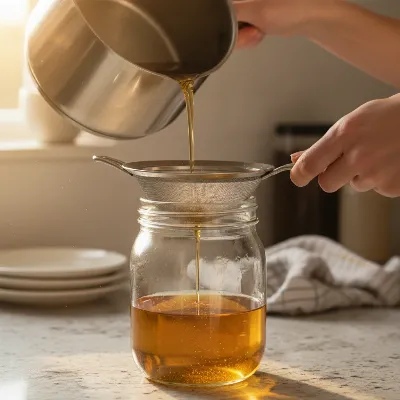 A person carefully straining used deep fryer oil into a storage container
Choosing the Best Deep Fryer Oil
Selecting the right oil is foundational to successful and enjoyable deep-frying at home. The choice impacts not only the taste of your food but also the lifespan of your oil and its health implications.
Smoke Point Considerations
The smoke point is the temperature at which an oil begins to burn and produce smoke. This is a critical factor for deep frying because when oil reaches its smoke point, it starts to break down, releasing free radicals and imparting an unpleasant, acrid taste to your food. For deep frying, you need an oil with a high smoke point, generally above 350°F (176°C), to accommodate the high temperatures required for crispy results.
| Oil Type | Smoke Point (°F) | Flavor Profile | Key Benefits | Best For |
|---|---|---|---|---|
| Peanut Oil | 450 | Subtle, nutty | High heat stability, crispy results | General frying, Asian cuisine |
| Canola Oil | 400 | Neutral | Affordable, low in saturated fat | Versatile, everyday frying |
| Sunflower Oil (High Oleic) | 440 | Light, neutral | High in Vitamin E, good stability | Delicate foods, general frying |
| Avocado Oil | 520 | Mild | Very high smoke point, heart-healthy | High-temperature cooking, healthy option |
| Vegetable Oil Blend | 400-450 | Neutral | Cost-effective, versatile | Budget-friendly general frying |
| Safflower Oil | 510 | Neutral | Very high smoke point, light taste | Extremely high-temperature applications |
Flavor Profile and Health Benefits
Beyond smoke point, consider the oil’s flavor and nutritional profile. Oils like canola, sunflower, and vegetable blends have a neutral taste, making them highly versatile for a wide range of fried foods without altering their inherent flavors. Peanut oil adds a very subtle nutty note, which can be delightful in certain dishes.
From a health perspective, oils rich in monounsaturated fats (MUFAs), such as avocado oil and high-oleic sunflower oil, are often preferred due to their stability at high temperatures and potential heart health benefits. While oils high in saturated fats (like coconut oil or palm oil) are stable, many health organizations recommend moderation in their use. Oils high in polyunsaturated fats (like traditional corn or soybean oil) are generally less stable and prone to oxidation when heated, making them less ideal for repeated deep frying unless they are specifically high-oleic varieties.
Cost-Effectiveness
For home cooks, cost is often a practical consideration. Vegetable oil blends and canola oil are typically the most budget-friendly options, making them popular choices for everyday deep frying. Peanut oil is usually a mid-range option, while avocado oil, with its very high smoke point and health benefits, tends to be more expensive. When choosing, balance the desired performance and health aspects with your budget and how frequently you plan to deep-fry.
Where to Buy Deep Fryer Oil and Responsible Disposal
Once you’ve mastered the art of oil maintenance, knowing where to purchase fresh oil and, equally important, how to dispose of used oil responsibly completes the deep-frying cycle.
Reputable Retailers and Online Sources
For home deep fryer oil, you have several accessible options. Most major supermarkets carry a wide selection of suitable oils like canola, vegetable, and sunflower oil in various sizes. For specialty oils like peanut or avocado oil, you might find larger containers at warehouse clubs, health food stores, or international markets, which can be more cost-effective if you deep-fry frequently. Online retailers also offer a broad range of cooking oils, often with the convenience of bulk purchasing and home delivery. When buying, always check the expiration date and look for oils specifically labeled for deep frying or with a high smoke point.
Environmentally Friendly Oil Disposal
Proper disposal of used cooking oil is critical, not just for your plumbing but for the environment. Never pour used cooking oil down the drain or into the toilet. It will solidify, clog pipes, and can lead to expensive plumbing issues and environmental damage.
The most environmentally friendly method is recycling. Many communities offer cooking oil recycling programs, often at local waste management facilities, public works depots, or even some auto parts stores that accept used motor oil (they often take cooking oil too, but always confirm). You can also check with local restaurants, as some may have commercial grease recycling services that accept small quantities from residents.
If recycling isn’t available in your area, the safest home disposal method is to allow the oil to cool completely, then pour it into a sturdy, non-recyclable, sealable container, such as an empty milk carton, plastic bottle, or coffee can. Once sealed, you can then place this container in your regular household trash. This prevents leaks and contamination in landfills.
Conclusion
Mastering the art of deep frying at home involves more than just a great recipe; it hinges on the diligent care and timely changing of your deep fryer oil. Understanding the nuanced factors that influence oil degradation—from the types of food you fry to the temperature you maintain—empowers you to make informed decisions. By recognizing the tell-tale signs of degraded oil, such as darkening color, off-putting smells, or decreased performance, you ensure every batch of fried food is as delicious and healthy as possible.
Implementing simple DIY maintenance routines, including consistent straining, proper storage, and regular fryer cleaning, can significantly extend your oil’s lifespan, saving you money and reducing waste. Furthermore, choosing the right high-quality, high smoke point oil from the outset sets you up for success. By integrating these practices into your home cooking, you’re not just frying; you’re crafting culinary experiences with confidence and expertise. So, what delicious dish will you create next with your perfectly maintained deep fryer oil?
Frequently Asked Questions
What is the ideal temperature for deep frying?
The ideal temperature for most deep frying is generally between 350°F and 375°F (176°C and 190°C). This range ensures food cooks quickly and evenly, achieving a crispy exterior without absorbing too much oil. Using an oil thermometer to monitor and adjust the temperature is highly recommended for best results.
Can I mix old oil with new oil?
While tempting to top off with new oil, it’s generally not recommended to mix old oil with new oil for deep frying. The degraded compounds in the old oil will quickly contaminate the fresh oil, accelerating its breakdown and diminishing the quality and lifespan of the entire batch. It’s best to replace all the oil once it shows signs of degradation.
How do I properly filter oil at home?
To properly filter oil at home, allow it to cool completely. Then, place a fine-mesh strainer lined with several layers of cheesecloth or a coffee filter over a clean, heat-proof container. Slowly pour the cooled oil through the filter to remove food particles and sediment. Store the strained oil in an airtight container in a cool, dark place.
Is it unhealthy to reuse deep fryer oil?
Reusing deep fryer oil itself is not inherently unhealthy, provided it is properly maintained and changed regularly. However, using oil that has degraded past its prime can lead to the formation of harmful compounds and negatively affect your health, in addition to ruining the taste of your food. Always monitor the oil for signs of spoilage.
How long can unused, opened deep fryer oil be stored?
Once opened, most deep fryer oils should be kept for no more than three months, even if unused. For used and filtered oil, its lifespan depends heavily on usage, but refrigeration in a sealed container can help maximize its longevity, usually extending it for a few weeks to a couple of months at most.
