Owning a deep fryer opens up a world of culinary possibilities, from crispy fries to perfectly golden chicken. However, the secret to consistently delicious results and a long-lasting appliance isn’t just in the cooking; it’s in the care. A deep fryer, especially a new one, requires diligent maintenance to perform at its best, ensure food safety, and protect your investment. Without proper attention, accumulated grease, degraded oil, and neglected components can quickly diminish its efficiency and even compromise the flavor of your favorite fried foods. This guide will walk you through the essential maintenance practices, from daily routines to deep cleaning techniques, ensuring your deep fryer remains a reliable and safe workhorse in your kitchen for years to come.
Understanding Your Deep Fryer
At its core, a deep fryer is designed to rapidly cook food by immersing it in hot oil. The heating element raises the oil temperature, creating a crisp exterior while cooking the interior of the food. The quality and cleanliness of this oil are paramount. Over time, food particles, moisture, and cooking byproducts accumulate in the oil, leading to degradation. This not only affects the taste and texture of your food but can also shorten the lifespan of the fryer itself and pose potential health risks. Proper maintenance is therefore not just about cleaning; it’s about preserving the integrity of the cooking medium and the appliance.
Why is diligent care so critical? Firstly, it directly impacts the food quality. Clean oil produces food with a better taste, appearance, and texture. Secondly, regular maintenance extends equipment lifespan, preventing premature wear and tear on components caused by grime and residue. Thirdly, it enhances safety by reducing fire hazards from excessive grease buildup and ensuring the appliance operates correctly. Finally, it saves money by maximizing oil life and avoiding costly repairs or premature replacement of your deep fryer.
Key Factors in Deep Fryer Maintenance
Effective deep fryer maintenance isn’t a one-size-fits-all approach; it’s tailored to how you use your appliance. Understanding these key factors will help you establish a maintenance routine that’s both efficient and effective.
- Frequency of Use: An infrequently used deep fryer (e.g., once every few months) might only need a thorough cleaning every six months, whereas a unit used weekly or daily demands more frequent attention. The more often you fry, the more often components like oil filtration and surface cleaning become critical.
- Type of Food: Foods with heavy breading, batters, or high moisture content, such as fish or chicken, release more particles and water into the oil, accelerating its degradation. If you frequently fry these types of items, your oil will need filtering and changing more often than if you primarily fry items like French fries.
- Oil Type: The type of frying oil you choose also plays a role. Oils with higher smoke points, such as peanut, canola, or vegetable oils, generally withstand heat better and degrade slower. Using a high-quality oil can help extend the time between full oil changes, provided it’s properly filtered and stored.
- Deep Fryer Model: Every deep fryer comes with a user manual, which is your most authoritative guide. Different models have varying disassembly instructions, cleaning recommendations, and dishwasher-safe components. Always consult your specific manual, especially regarding heating elements and electrical parts, as improper cleaning can cause irreparable damage.
Comprehensive Deep Fryer Maintenance Schedule
A layered approach to deep fryer maintenance ensures all aspects of the appliance are cared for, from the oil to the exterior. Adhering to a regular schedule helps prevent small issues from becoming major problems.
Daily Maintenance
|
Our Picks for the Best Deep Fryer in 2026
As an Amazon Associate I earn from qualifying purchases.
|
||
| Num | Product | Action |
|---|---|---|
| 1 | Hamilton Beach Cool Touch Electric Deep Fryer with Basket and Lid, 2 Liters / 8 Cups Oil Capacity, Adjustable Temperature, 1500 Watts for Fast Heat-up, viewing Window Easy to Clean, Black (35021) |

|
| 2 | Elite Gourmet Electric Deep Fryer, 4.5 Qt Total Oil Capacity (Dual 2-Qt Split Baskets), 1700 Watts, Stainless Steel, Separates Foods for Simultaneous Cooking, Stainless Steel |
|
| 3 | Hamilton Beach 35032 Professional Style Electric Deep Fryer, Frying Basket with Hooks, 1500 Watts, 3 Liters, Stainless Steel |
|
| 4 | West Bend Deep Fryer with Adjustable Temperature Control Nonstick Basket Easy-View Window and Temperature Guide, Folding Handle and Locking Cover for Easy Storage, 3-Liter, Silver |
|
| 5 | Chefman 4.5 Liter Deep Fryer w/Basket Strainer, XL Jumbo Size, Adjustable Temperature & Timer, Perfect for Fried Chicken, Shrimp, French Fries, Chips & More, Removable Oil-Container, Stainless Steel |
|
| 6 | Secura 4 Liters / 17-Cup Stainless-Steel 1700-Watt Electric Deep Fryer with Timer Free Extra Odor Filter, Triple Basket, 4.5 Quarts, Silver |
|
| 7 | Alpha Living Electric Deep Fryer – 4.5L Deep Fryer with Basket with 2-Quart and 4-Quart Baskets – High-Grade Stainless Steel – Temperature Control and Timer – Ideal for Fried Chicken, Fries |
|
| 8 | T-fal 3.5L Stainless Steel Deep Fryer with Basket for Home Use, 1700W, Deep Fryer with Oil Filtration, Temp Control, Digital Timer |
|
| 9 | Secura 4 Liters / 17-Cup Stainless-Steel 1700-Watt Electric Deep Fryer with Timer Free Extra Odor Filter, Triple Basket, 4.5 Quarts, Black |
|
| 10 | Hamilton Beach Electric Deep Fryer with 3 Baskets and Lid, 4.5 Liters / 19 Cups Oil Capacity, Temperature Control, View Window, Professional Style, 1800 Watts, Stainless Steel (35034) |
|
After each use, or at the end of a busy frying day, these quick steps are crucial. They primarily focus on the immediate removal of food debris and surface grease before they harden. Skim the oil using a fine-mesh strainer or skimmer to remove any floating food particles, which can burn and contaminate the oil. Once the fryer has cooled completely, wipe down the exterior surfaces with a damp cloth and mild detergent to prevent grease buildup. Remove and clean the fry baskets thoroughly with hot, soapy water, ensuring all food residue is scrubbed away. This daily routine keeps the immediate cooking environment clean and extends the life of your oil.
Weekly Maintenance
For regular users, a deeper clean is necessary once a week. This involves filtering the oil more thoroughly and addressing internal surfaces. Once the oil has cooled, carefully filter it through a dedicated oil filtration system or a fine-mesh strainer lined with cheesecloth or a coffee filter into a clean, airtight container. After draining the oil, wipe down the interior of the oil pot or reservoir with a warm, soapy cloth or a specialized degreaser to remove any lingering residue. Also, inspect and, if necessary, clear any drains or oil flow paths to prevent clogs and ensure smooth operation.
Monthly Maintenance (or After 6-8 Uses)
This is where the deep cleaning truly happens, ensuring your fryer is hygienically clean and free from stubborn, burnt-on grease. This process typically involves a “boil-out” and a complete oil change. First, drain and dispose of the old oil responsibly (never down the drain!). Disassemble all removable parts, including the lid, baskets, and the oil pot if separate. Perform a “boil-out” by filling the fryer well with water and a few drops of dish soap or a dedicated fryer cleaning solution. Heat the mixture to a gentle boil for 10-15 minutes, which will loosen stubborn grease and carbonized food. After cooling, scrub all surfaces with a non-abrasive sponge or brush. Thoroughly rinse all components and ensure they are completely dry before reassembling. This is also the ideal time to replace old oil with fresh oil.
> “The ‘boil-out’ method is a game-changer for deep cleaning. It lifts away stubborn, polymerized grease that simple wiping can’t touch, making your fryer sparkle and ensuring a neutral base for fresh oil.” – Chef Elena Rodriguez, Culinary Equipment Specialist
Seasonal or Infrequent Use
If your deep fryer is only used occasionally, ensure it’s spotless before storage. After a full monthly cleaning and boil-out, make sure every component is absolutely dry to prevent rust or mildew. Store the fryer in a cool, dry place, ideally covered, to protect it from dust and humidity. For best results, store fresh oil separately in a cool, dark place rather than leaving it in the fryer.
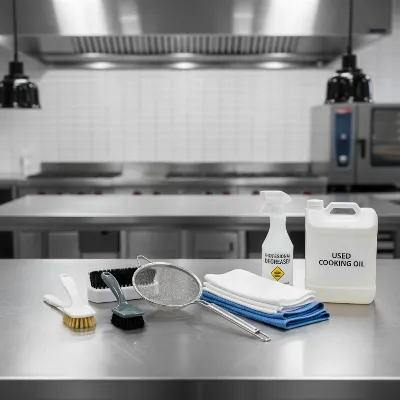 Essential deep fryer maintenance tools laid out for cleaning and care
Essential Maintenance Practices: Step-by-Step Guides
Delving into the specifics of oil management and cleaning techniques will equip you with the knowledge to maintain your deep fryer like a professional.
Oil Management
The quality of your oil directly impacts the flavor of your food and the health of your fryer.
- Choosing the Right Oil: Opt for high-quality frying oils with a high smoke point, such as peanut, canola, vegetable, or sunflower oil. These oils can withstand higher temperatures without breaking down quickly, leading to better-tasting food and longer oil life.
- Filtering Oil Techniques:
- Manual Filtration: After the oil has cooled to a safe temperature, carefully pour it through a fine-mesh strainer. For even better results, line the strainer with cheesecloth or a coffee filter to catch smaller particles.
- Oil Filtration Systems: Some advanced deep fryers come with built-in filtration systems, or you can purchase external filter machines, especially useful for frequent users. These systems effectively remove impurities and significantly extend oil usability.
- When to Change Oil: A general rule of thumb for home use is to change the oil every 6-8 uses. However, if you notice the oil darkening significantly, producing excessive smoke at normal frying temperatures, developing an unpleasant odor, or imparting off-flavors to your food, it’s time for a change, regardless of the number of uses. Frying heavily breaded or high-moisture foods will necessitate more frequent changes.
- Proper Oil Storage and Disposal: Always allow oil to cool completely before storing. Filtered oil should be stored in a clean, airtight container in a cool, dark place to prevent oxidation and rancidity. Never pour used cooking oil down the drain, as it can cause severe plumbing blockages and environmental issues. Instead, collect it in a sealed container and dispose of it with your household trash or check for local recycling programs.
- Temperature Control: Always maintain the correct frying temperature for your food. Overheating oil accelerates its breakdown, while temperatures that are too low cause food to absorb excess oil, making it greasy. Use your fryer’s thermostat or a separate thermometer to ensure consistent temperatures.
Cleaning Your Deep Fryer
A thorough cleaning is paramount for hygiene and performance.
- Safety First: Before beginning any cleaning, always ensure your deep fryer is unplugged from the electrical outlet. Crucially, allow the appliance to cool completely – this can take several hours – to prevent severe burns from hot oil or surfaces.
- Disassembly and Cleaning Removable Parts: Once cooled, carefully disassemble all removable parts such as the lid, baskets, and the oil pot or reservoir (if applicable). These components can generally be washed with hot, soapy water and a degreaser. For stubborn grime, a non-abrasive scrub brush or sponge is effective. Check your manual; some parts might be dishwasher safe.
- The “Boil Out” Method: This is the most effective way to tackle baked-on grease and carbon residue inside the fryer well.
- Drain and Wipe: First, remove all oil and wipe out as much visible grease as possible with paper towels.
- Fill with Solution: Fill the fryer well with water, leaving enough space to prevent boiling over. Add a few drops of dish soap or a specialized non-foaming deep fryer cleaning solution (following product instructions).
- Heat and Boil: Plug the fryer back in and heat the water mixture to a gentle boil. Let it simmer for 10-15 minutes. The hot, soapy water will loosen even the most stubborn, polymerized grease.
- Cool and Scrub: Unplug the fryer and let the solution cool completely. Once cool, drain the water. Use a non-abrasive sponge or brush to scrub away any remaining loosened grime.
- Rinse and Dry: Rinse the fryer well thoroughly with clean water multiple times until no soap residue remains. Ensure all components are completely dry before reassembly or refilling with oil to prevent water from reacting with hot oil.
- Cleaning Heating Elements: This is a crucial step that requires care. Never immerse the heating element in water. For most home deep fryers, the heating element can be carefully removed (consult your manual). Simply wipe it down with a cleaning cloth dampened with hot, soapy water. For stubborn, burnt-on bits, a soft brush can be used gently. Ensure it is completely dry before returning it to the fryer.
- Wiping Down the Base/Reservoir: After removing the oil pot, thoroughly wipe down the inside of the fryer’s base and any surrounding areas with a degreaser and a clean cloth. This prevents accumulated grease from becoming a fire hazard or emitting unpleasant odors.
- Cleaning Baskets: Fryer baskets often accumulate stubborn, crispy residue. Soak them in hot, soapy water with a degreaser for 30 minutes before scrubbing with a stiff brush. Ensure all mesh and crevices are clean for optimal food flow and hygiene.
Preventative Care
Proactive measures can significantly extend the life and efficiency of your deep fryer.
- Avoiding Cross-Contamination: If possible, avoid frying vastly different types of foods (e.g., fish and donuts) in the same batch of oil, as flavors can transfer. For home use, if you only have one fryer, schedule strong-flavored foods for when you plan to change the oil soon after.
- Preventing Polymerization: This occurs when oil breaks down and forms a sticky, hard residue on surfaces. Minimize exposure of hot oil to air when not in use (by covering the fryer) and keep the oil clean of food particles, which accelerate the process. Regular boil-outs are key to removing existing polymerized oil.
- Inspecting for Damage: Regularly check your fryer baskets for bent wires or damage that could affect cooking or pose a safety risk. Inspect the heating element for any visible signs of wear. Early detection of issues can prevent more significant problems down the line.
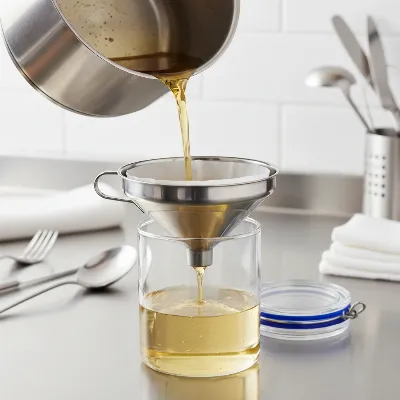 Deep fryer oil being filtered into a clean storage container
Deep Fryer Maintenance Checklist
This checklist provides a clear overview of tasks, recommended frequency, necessary tools, and the benefits of each action to keep your deep fryer in peak condition.
| Task | Frequency | Materials/Tools | Benefits |
|---|---|---|---|
| Skim Oil | Daily/After each use | Fine-mesh skimmer or strainer | Removes large food particles, prevents burning, extends oil life |
| Wipe Exterior Surfaces | Daily | Damp cloth, mild detergent | Prevents grease buildup, maintains clean appearance |
| Clean Fry Baskets | Daily | Hot soapy water, degreaser, brush | Removes food residue, ensures even cooking, prevents sticking |
| Filter Oil | Weekly/Every 1-2 uses | Oil filter paper, filter machine, or cheesecloth | Removes fine impurities, preserves oil quality, prolongs usability |
| Wipe Interior of Oil Pot/Reservoir | Weekly | Warm soapy cloth, degreaser | Prevents residue buildup, reduces oil contamination |
| Inspect/Clear Drains | Weekly | Drain cleaner (if applicable) | Prevents clogs, ensures proper oil drainage |
| Perform “Boil Out” Cleaning | Monthly/Every 6-8 uses | Water, dish soap/fryer cleaner, non-abrasive sponge | Deep cleans stubborn grease, removes carbon buildup, restores hygiene |
| Change Frying Oil Completely | Monthly/Every 6-8 uses | Fresh frying oil | Maintains optimal food flavor, quality, and safety |
| Clean Heating Element | Monthly/Periodically | Damp cloth, soft brush | Ensures efficient heating, prevents energy waste, prolongs element life |
| Inspect All Components | Monthly | Visual inspection | Identifies wear, damage, or potential issues early |
| Store Used Oil Properly | After each use | Airtight container, cool dark place | Prevents oxidation, maintains oil freshness for re-use, safe disposal |
Conclusion
Mastering the art of deep frying involves more than just perfect recipes; it hinges on consistent, thoughtful maintenance of your deep fryer. By diligently following a structured maintenance schedule—from daily skimming and wiping to weekly oil filtration and monthly deep cleaning—you not only ensure the longevity and efficiency of your appliance but also elevate the quality and safety of every meal you prepare. Investing time in these essential maintenance practices is an investment in better-tasting food, a safer kitchen, and a lasting culinary tool. Take pride in your deep fryer’s performance by making maintenance a priority. What’s your favorite deep-fried dish that tastes even better with perfectly maintained oil?
Frequently Asked Questions
How often should I change the oil in my home deep fryer?
For home use, it’s generally recommended to change the oil every 6-8 uses, or sooner if it becomes dark, smoky, or develops an off-odor, regardless of usage count. Heavy breaded foods or high-moisture items will necessitate more frequent changes to maintain quality.
Can I reuse deep fryer oil, and how should I store it?
Yes, you can reuse deep fryer oil, provided it’s filtered and stored correctly. After the oil cools, filter it through a fine-mesh strainer or cheesecloth, then store it in a clean, airtight container in a cool, dark place. This prevents oxidation and extends its usability.
What is the “boil-out” method, and why is it important?
The “boil-out” method involves filling the fryer well with water and a cleaning solution, then heating it to a gentle boil. This process effectively loosens stubborn, baked-on grease and carbonized food particles that regular cleaning can’t remove, restoring the fryer to a hygienic condition.
Is it safe to clean the heating element of my deep fryer?
Yes, but with extreme caution. Always unplug the fryer and ensure it’s completely cool. Never immerse the heating element in water. Instead, carefully wipe it down with a damp cloth and mild detergent. Consult your fryer’s manual for specific instructions on cleaning its heating element.
How can I prevent my deep fryer oil from breaking down too quickly?
To prolong oil life, always use high-quality oils with high smoke points, maintain consistent frying temperatures, skim food particles frequently, filter the oil regularly, and store it properly in a cool, dark, airtight container between uses. Avoid overfilling the basket, which can lower oil temperature and increase absorption.
